Japanese ukiyo-e
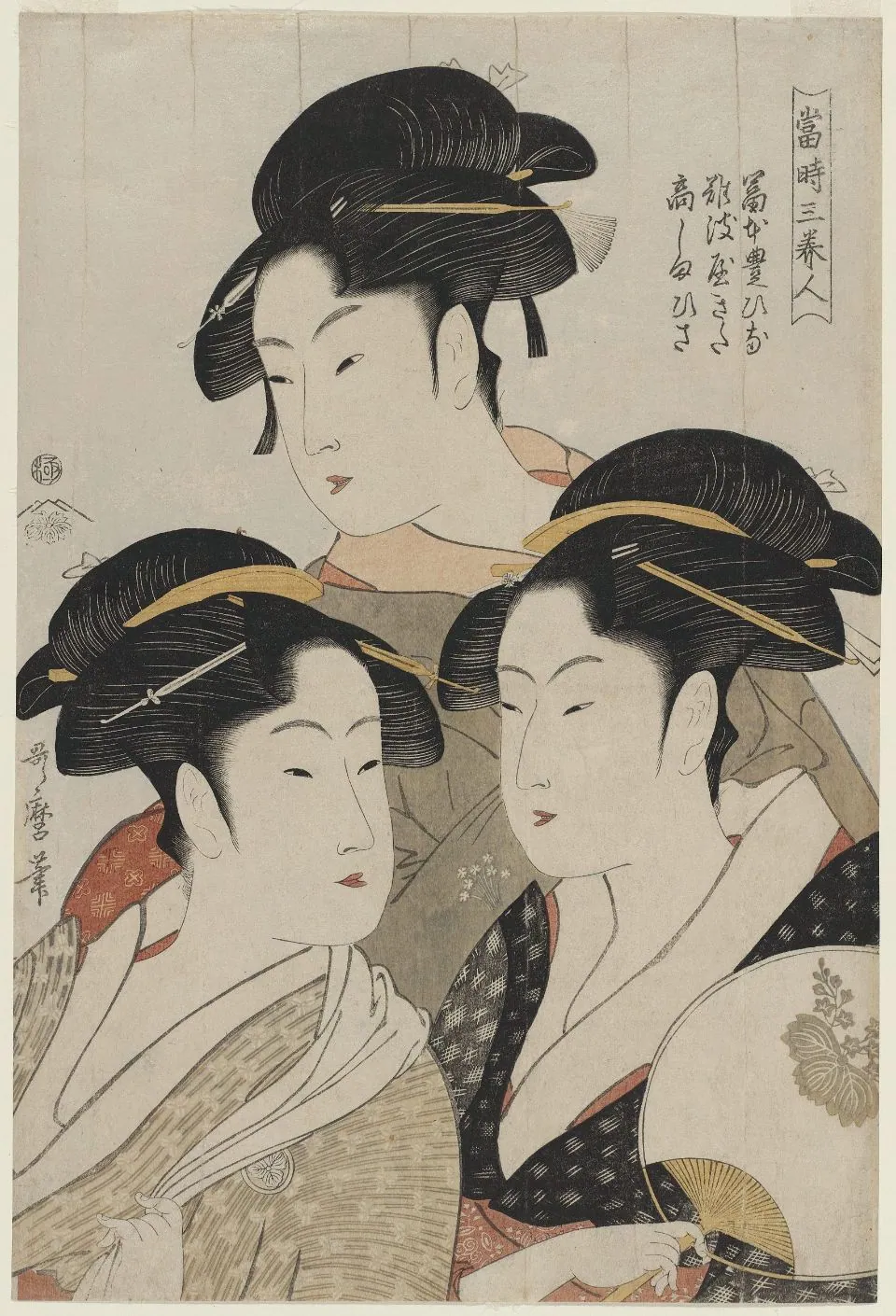
c. 1680–1900. Ukiyo-e — 'pictures of the floating world' — are Japanese woodblock prints of actors, beauties, landscapes and nature. Their bold design changed Western art.
 ◎ notes
Context
In Edo-period Japan (1603–1868), a prosperous city population bought affordable colour prints of kabuki actors, famous beauties and travel views.
Each print was a team effort: the artist drew the design, a carver cut it into cherry-wood blocks (one per colour), and a printer pressed it onto paper by hand.
When Japan opened to trade in the 1850s, prints reached Europe. Monet, Degas, Cassatt, Van Gogh and Whistler collected them and borrowed their flat colour, strong outline, cropping and high viewpoints (Japonisme).
Key artists
| Artist | Life | Known for |
|---|---|---|
| Kitagawa Utamaro | c. 1753–1806 | Elegant portraits of women. |
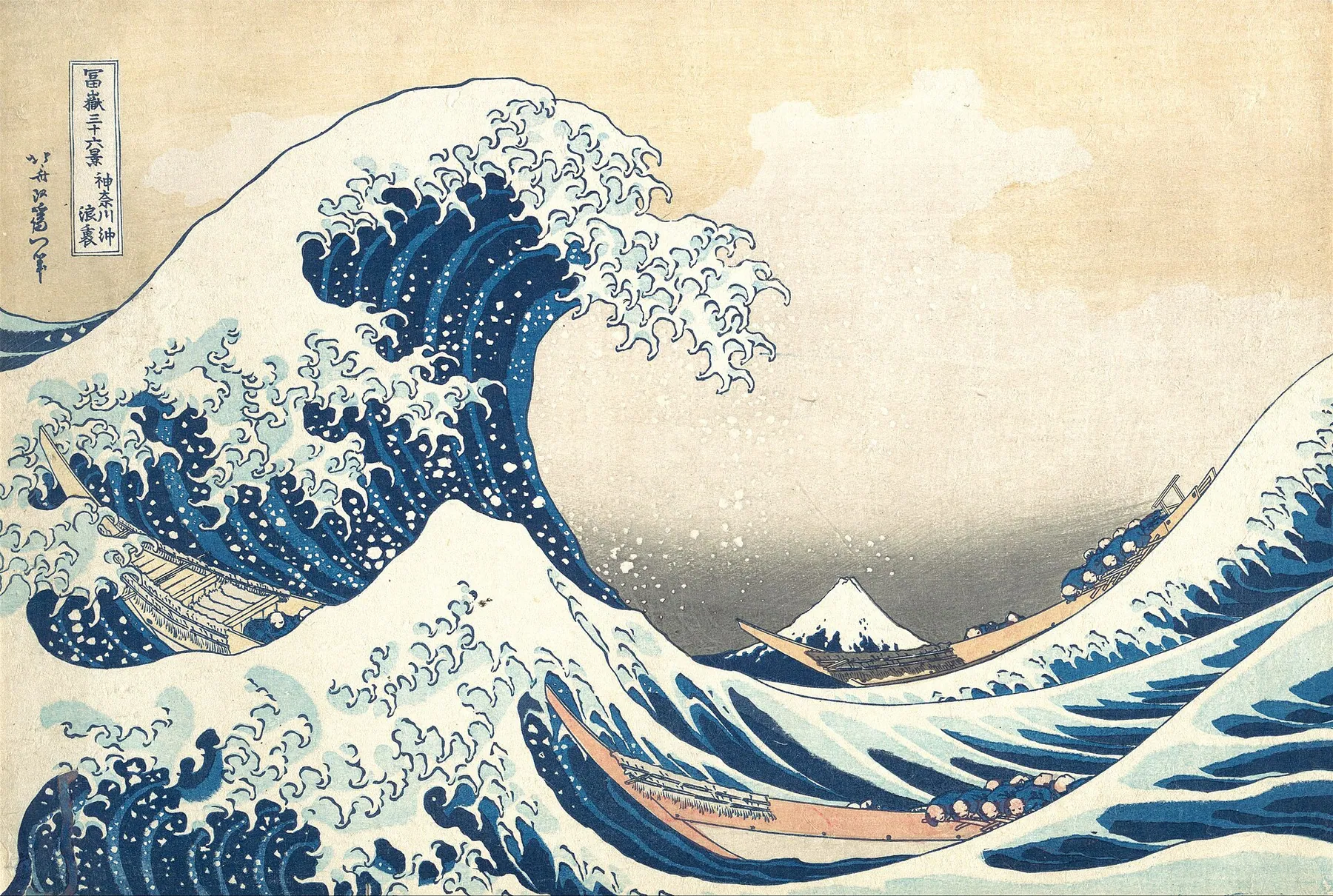
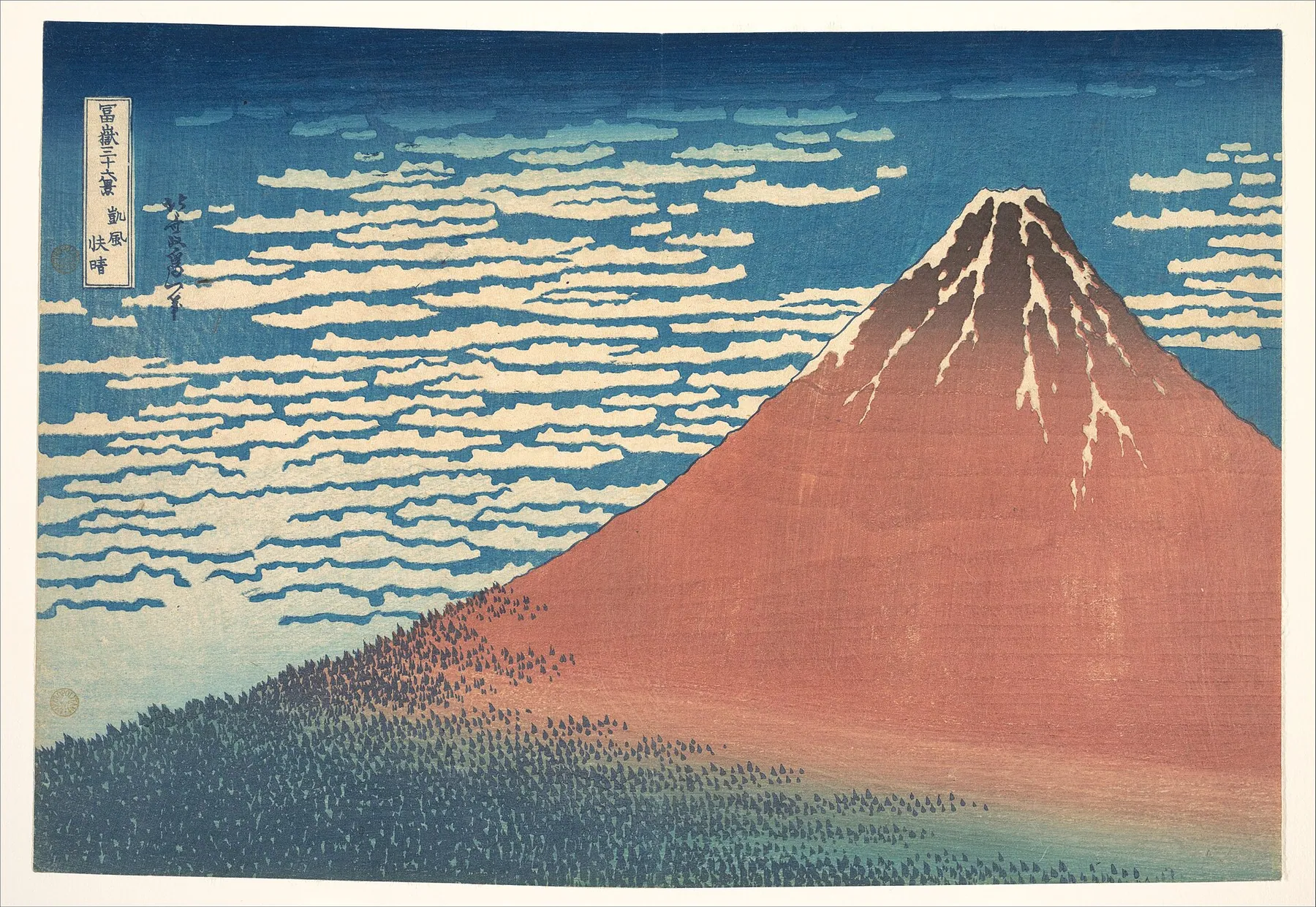
| Katsushika Hokusai | 1760–1849 | The Great Wave; Thirty-six Views of Mount Fuji. |
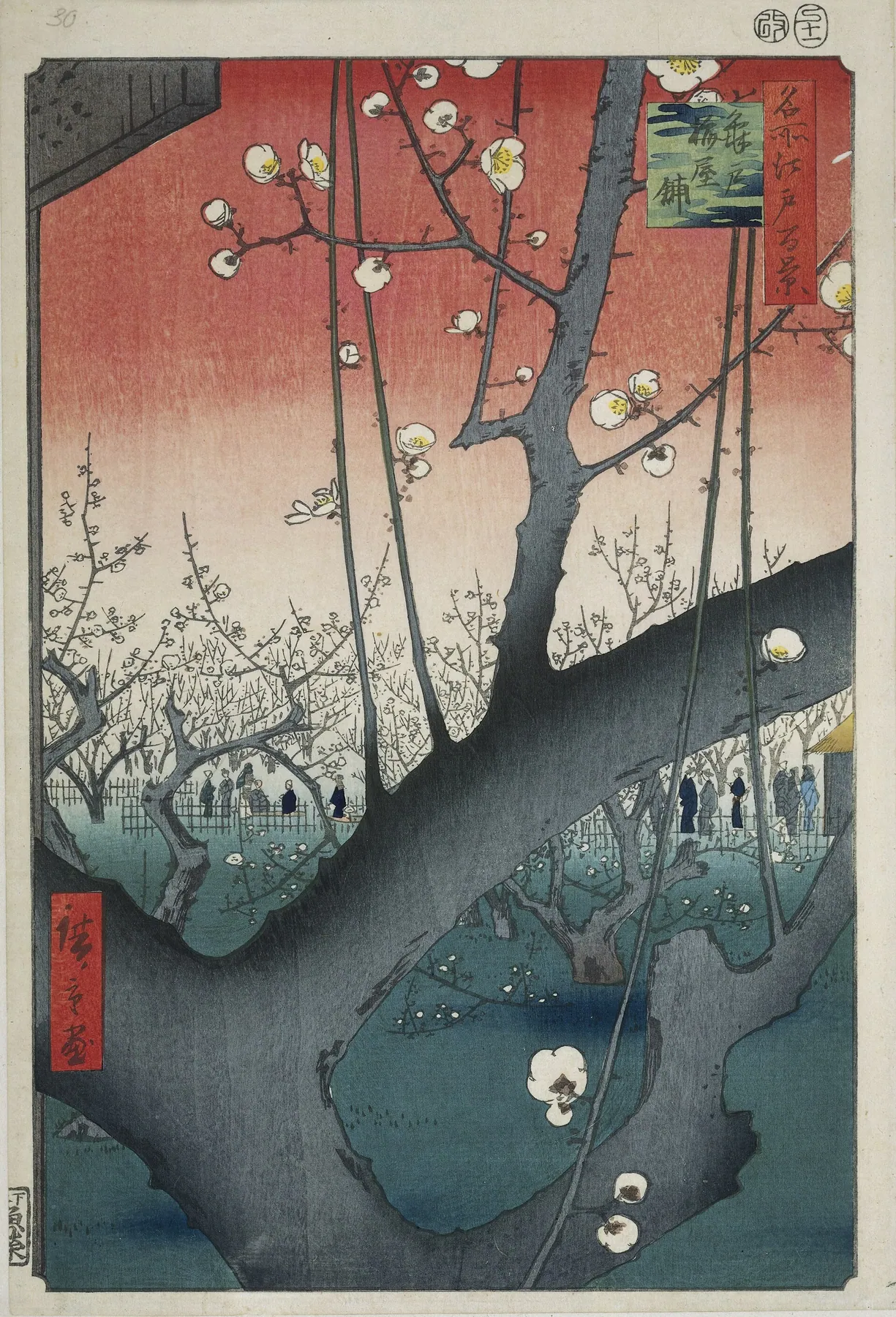
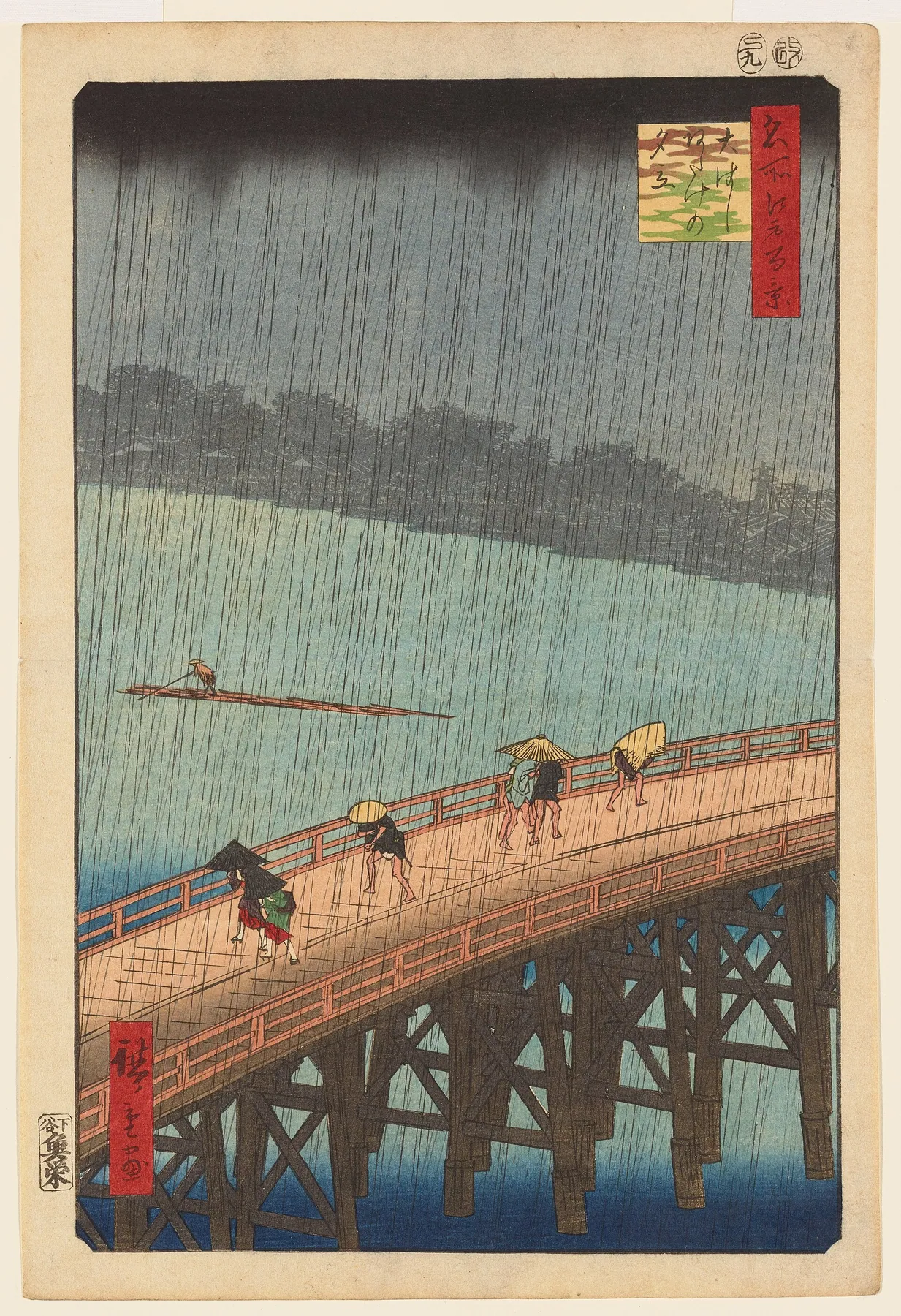
| Utagawa Hiroshige | 1797–1858 | Poetic landscapes and weather: One Hundred Famous Views of Edo. |
Key works
Tap any image to zoom; works marked ◎ have notes on key details.
Techniques
- Woodblock printing: one carved block per colour, aligned with registration marks (kentō).
- Strong, even key line (outline) printed from the first block.
- Flat areas of colour with gradations (bokashi) wiped onto the block.
- Prussian blue imported in the 1820s gave a new intense blue.
- Dramatic cropping, big foreground objects and high or low viewpoints.
- Empty space as an active part of the design.
How to paint in this style
- Design with a clear outline first — draw a confident key line in ink with a brush or fine pen.
- Limit yourself to 4–6 flat colours. Paint each as a flat area (gouache is ideal).
- Add a gradated sky: wet the area, then lay colour along one edge and let it fade.
- Frame the scene with a big foreground element — a branch, a wave, a bridge post.
- Leave areas of plain paper; don't fill every corner.
- Add a vertical cartouche (title box) for an authentic touch.
Sumi ink, Prussian blue, indigo, safflower pink, vermilion, yellow (from plants), and mica for shimmering backgrounds.
Drawings and studies
Watch
Beyond the Great Wave — Hokusai at 90 · Smarthistory
Videos load from YouTube (privacy-enhanced mode) only when you press play.