The road to abstraction
c. 1905–1920. By the 1910s some painters abandoned recognisable subjects altogether. Colour, line and shape could be the subject — like music without words.
Context
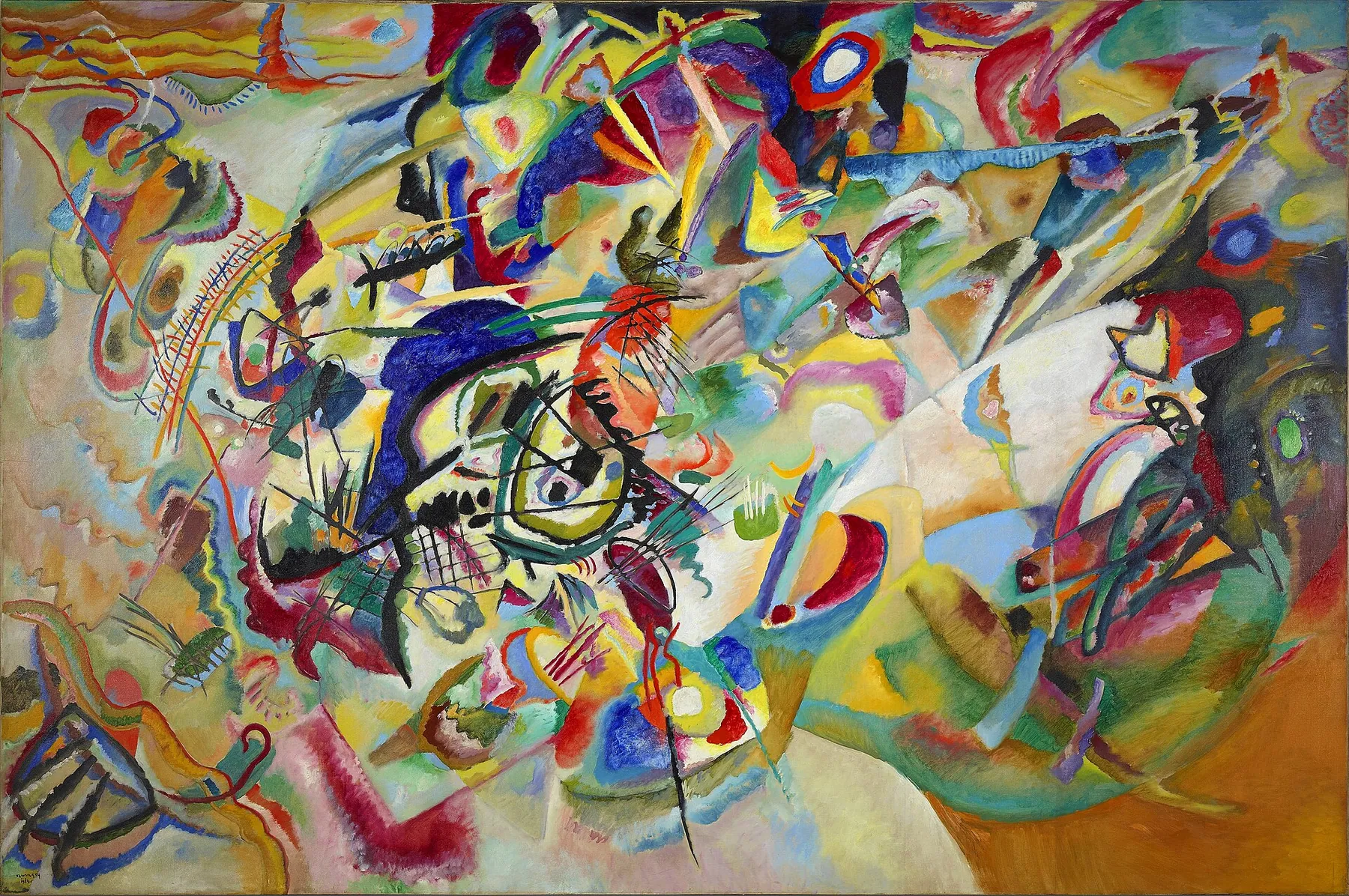
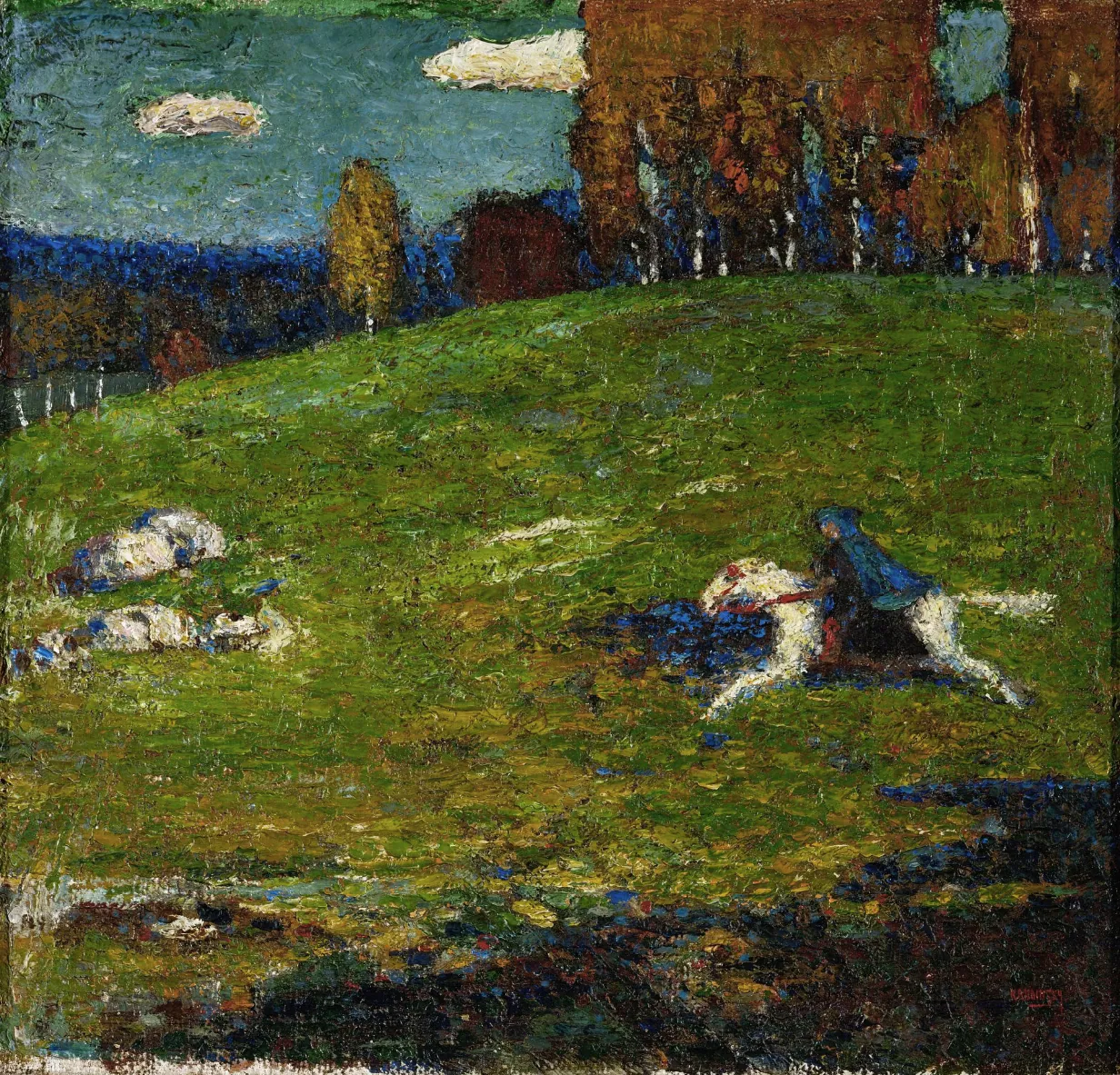
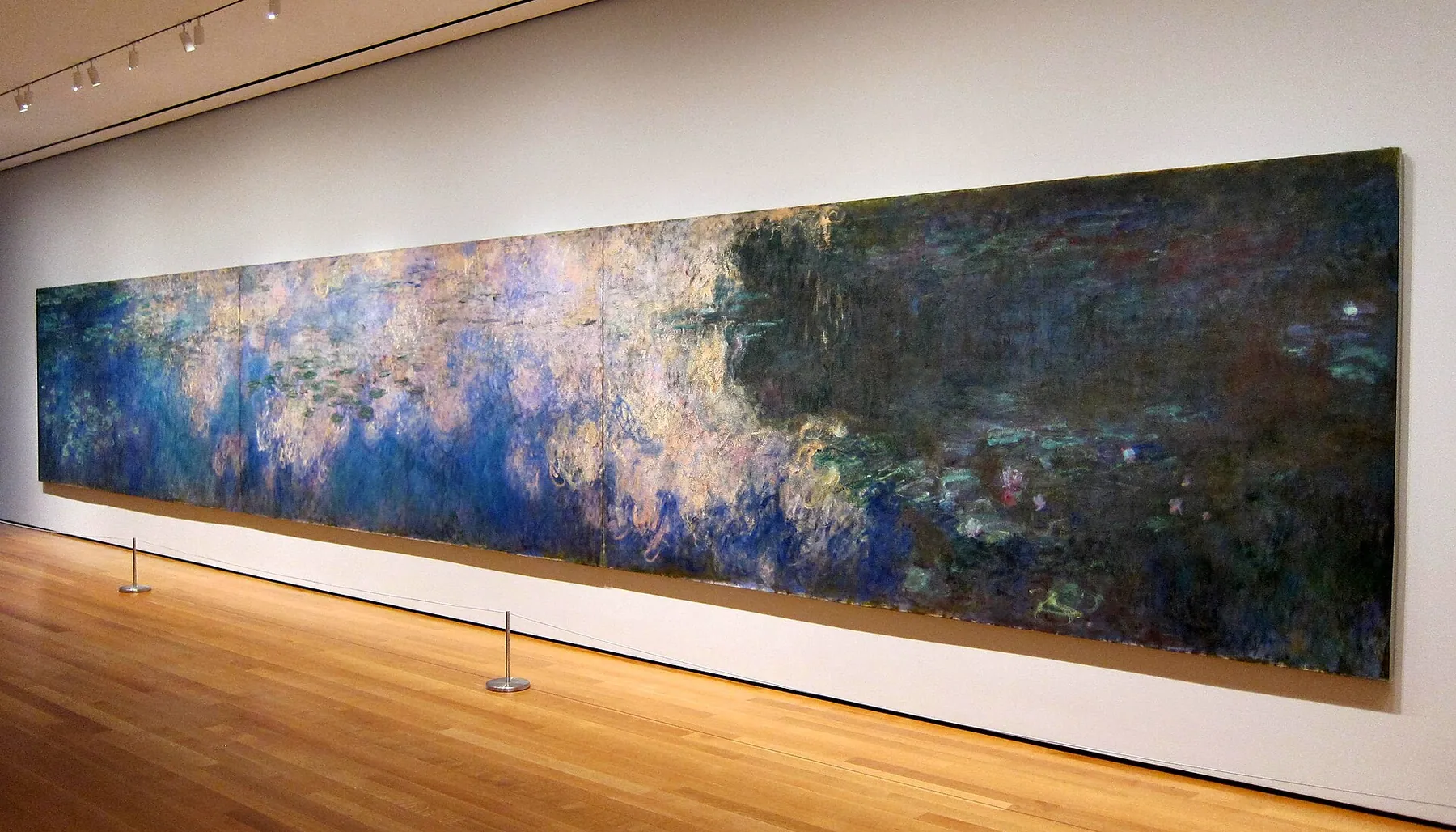
Kandinsky, a trained lawyer who saw Monet's Haystacks in Moscow, realised that a painting's power didn't depend on recognising its subject.
His Compositions (from 1910) used colour and line like musical notes and chords. Around the same time, Mondrian, Malevich and others developed their own abstract languages.
Most 20th-century art is still in copyright, so this book shows only early works that are in the public domain. Visit museum websites to see later works.
Key artists
| Artist | Life | Known for |
|---|---|---|
| Wassily Kandinsky | 1866–1944 | Composition VII; Concerning the Spiritual in Art (1911). |
| Piet Mondrian | 1872–1944 | Grids and primary colours. |
| Kazimir Malevich | 1879–1935 | Suprematism: pure geometric forms. |
| Hilma af Klint | 1862–1944 | Early spiritual abstraction. |
Key works
Tap any image to zoom; works marked ◎ have notes on key details.
Techniques
- Colour and line used for their own sake.
- Composition as rhythm, balance and tension.
- Geometric or organic ('lyrical') abstraction.
- Layering of transparent and opaque areas.
How to paint in this style
- Start from a real subject and simplify it in several steps until it is just shapes.
- Or start from music: choose a piece and paint the rhythm and mood.
- Pick a dominant colour, a supporting colour and a small accent.
- Balance large quiet areas with small busy ones.
- Step back often — judge it as a whole, not in parts.
Any modern palette: cadmiums, phthalo blue and green, quinacridones, titanium white, black.
Watch
Gustav Klimt, The Kiss · Smarthistory
Kandinsky, Improvisation 28 (second version), 1912 · Smarthistory
Munch, The Storm · Smarthistory
Videos load from YouTube (privacy-enhanced mode) only when you press play.