Anatomy I: Proportion and the figure
Artists measure the body in head-lengths. Real people vary — most adults are about 7 to 7½ heads tall — but the idealised 8-head figure gives you a reliable set of landmarks to check a drawing against.
Measuring in heads
Hold a pencil at arm's length, line the tip up with the top of the model's head and slide your thumb to the chin. That is one head unit. Now count how many fit into the whole figure, the torso or the arm. Keep your elbow locked so every measurement uses the same scale.
Landmarks fall close to the head-unit lines: chin at 1, nipples at 2, navel at about 3, the crotch at 4 (the midpoint of the body), mid-thigh at 5, just below the knee at 6, mid-shin at 7 and the soles at 8. The arms hang so the wrists reach the crotch and the fingertips reach mid-thigh.
Variation is the point
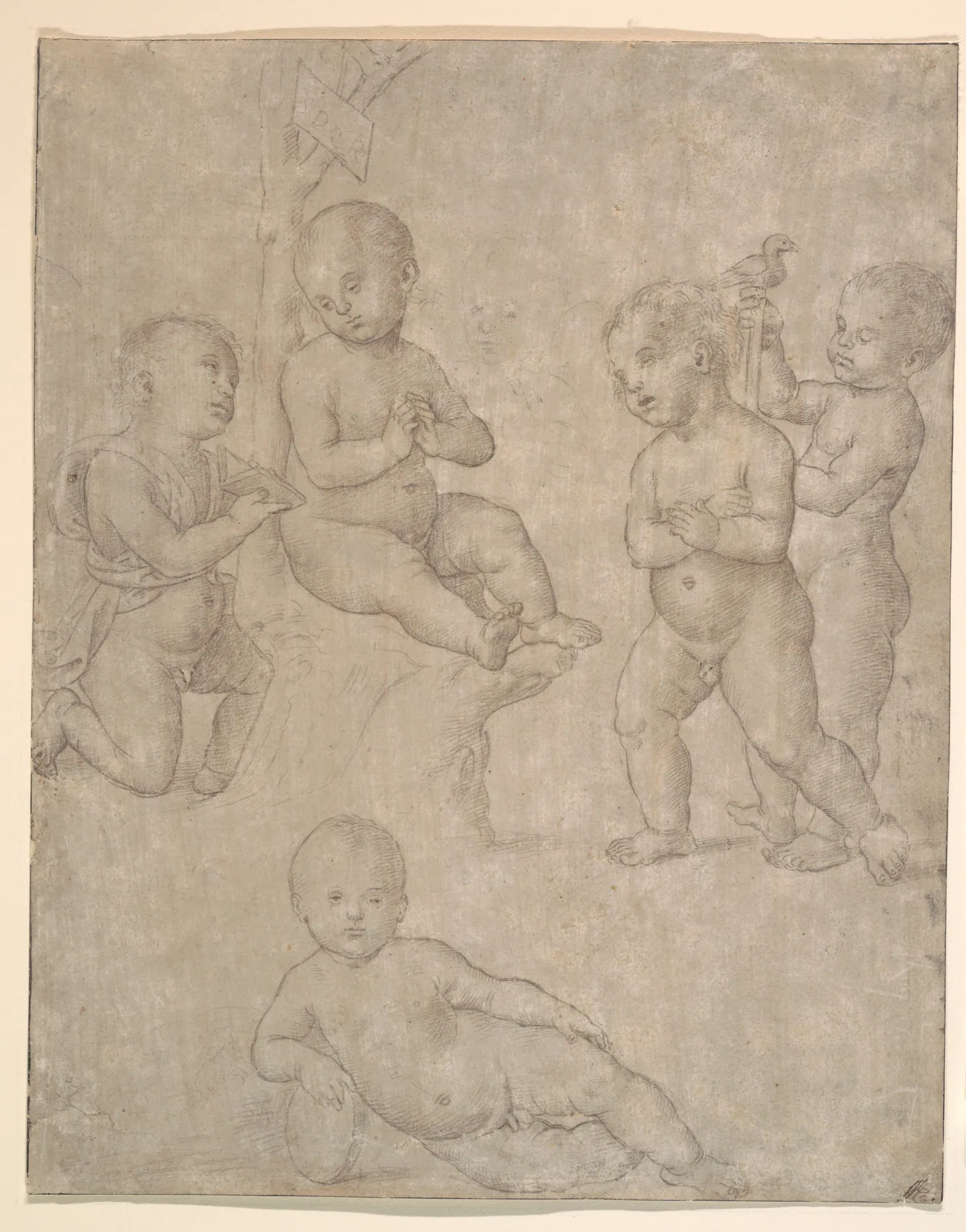
Children have much bigger heads relative to the body: a toddler is about 4 heads tall, a ten-year-old about 6. Heroic comic figures stretch to 9 heads. Fashion illustration exaggerates the legs. Learn the 8-head canon as a ruler, not a rule.
Typical differences between adult bodies: broader shoulders and a narrower pelvis on many men; a wider pelvis and a slightly lower waist on many women. Draw the person in front of you, not the formula.
Gesture first
Before proportion, find the line of action: one long curve that captures the pose — a C-curve, an S-curve or a straight thrust. Proportion is checked on top of a lively gesture, never the other way round.
In a relaxed standing pose (contrapposto) the weight sits on one leg. The hip on that side rises, the shoulders tilt the opposite way and the head usually sits over the weight-bearing foot.
Reference table
| Landmark | Head units from top | Tip |
|---|---|---|
| Chin | 1 | Use the head itself as the unit. |
| Nipples | 2 | Roughly level with the armpits in a relaxed pose. |
| Navel | ≈ 3 | The elbows hang at about the same height. |
| Crotch / great trochanter | 4 | Halfway down the body. |
| Fingertips | ≈ 5 | Arms hanging straight. |
| Knees | ≈ 6 | The kneecap sits just above the line. |
| Soles | 8 | Feet are about one head long. |
Historic plates
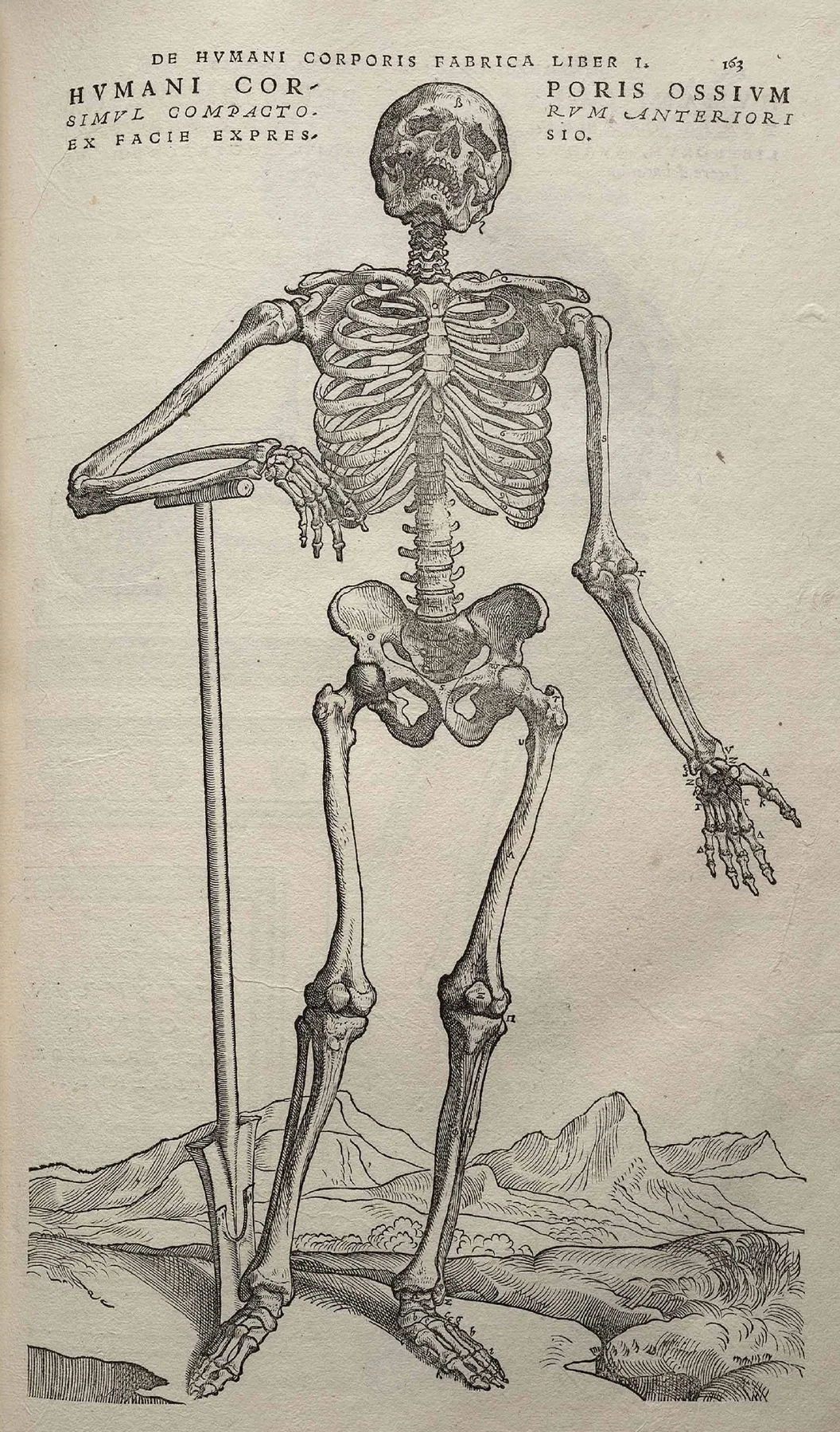
Public-domain plates from Vesalius (1543), Leonardo's anatomical notebooks and Gray's Anatomy (1918). Tap to zoom into the detail.
Master studies
- Do ten 30-second gestures with the drill timer, drawing only the line of action.
- Measure a photo of a standing figure with your pencil and mark the head units down the side.
Watch
Human Figure Proportions - Cranial Units - Robert Beverly Hale · Proko
Human Figure Proportions - Average Figures - Dr. Paul Richer · Proko
How to Draw Accurate Proportions · Proko
Videos load from YouTube (privacy-enhanced mode) only when you press play.