Anatomy V: The torso
The torso is two boxes — ribcage and pelvis — linked by a flexible column. Almost every expressive pose comes from tilting, twisting or bending those two boxes against each other.
Two masses
Draw the ribcage as an egg or a box tipped slightly back, and the pelvis as a shorter, wider box. Between them the belly and the lower back stretch on one side and squash on the other. On the squashed side you get folds; on the stretched side a long, smooth curve.
In contrapposto the pelvis tilts down towards the relaxed leg while the shoulders tilt the other way. Michelangelo's Libyan Sibyl studies show a back in strong twist: the shoulder blades turn while the pelvis stays put.
The shoulder girdle
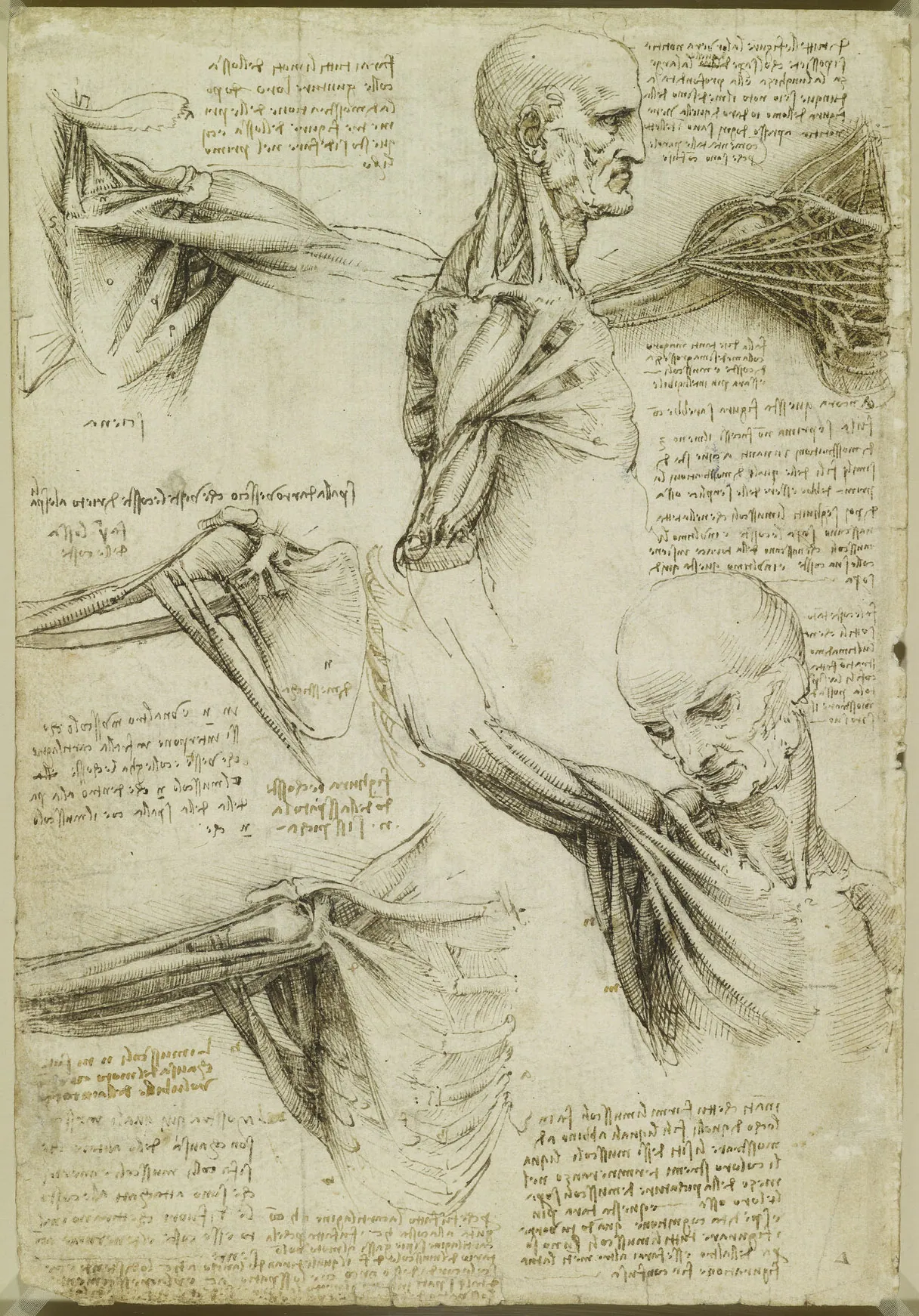
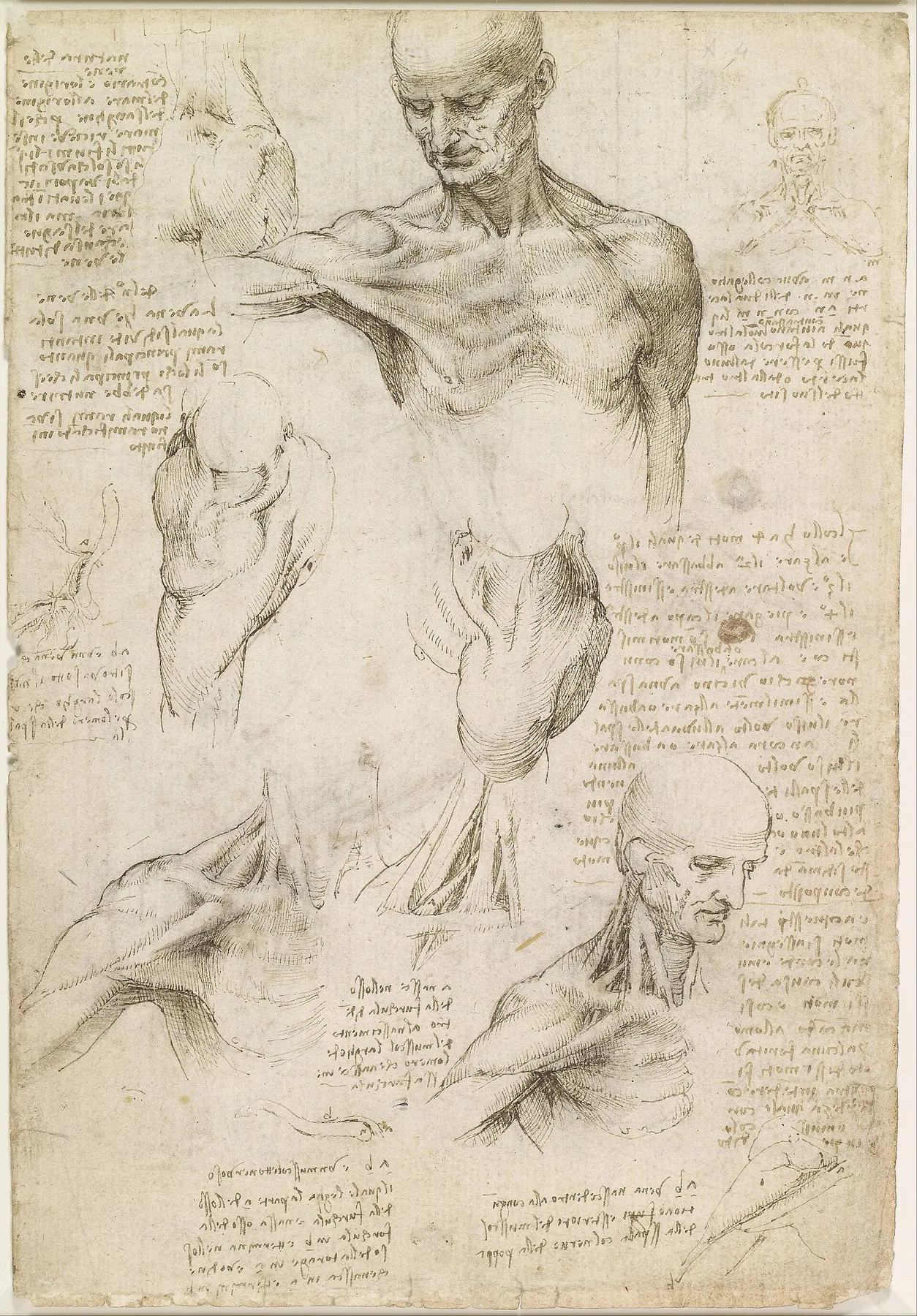
The shoulders are not fixed to the ribcage. The collarbones and shoulder blades float over it, held by muscles, so lifting an arm also lifts and rotates the shoulder blade. When the arm rises above the head, the deltoid and the shoulder blade move together and the armpit opens.
The back
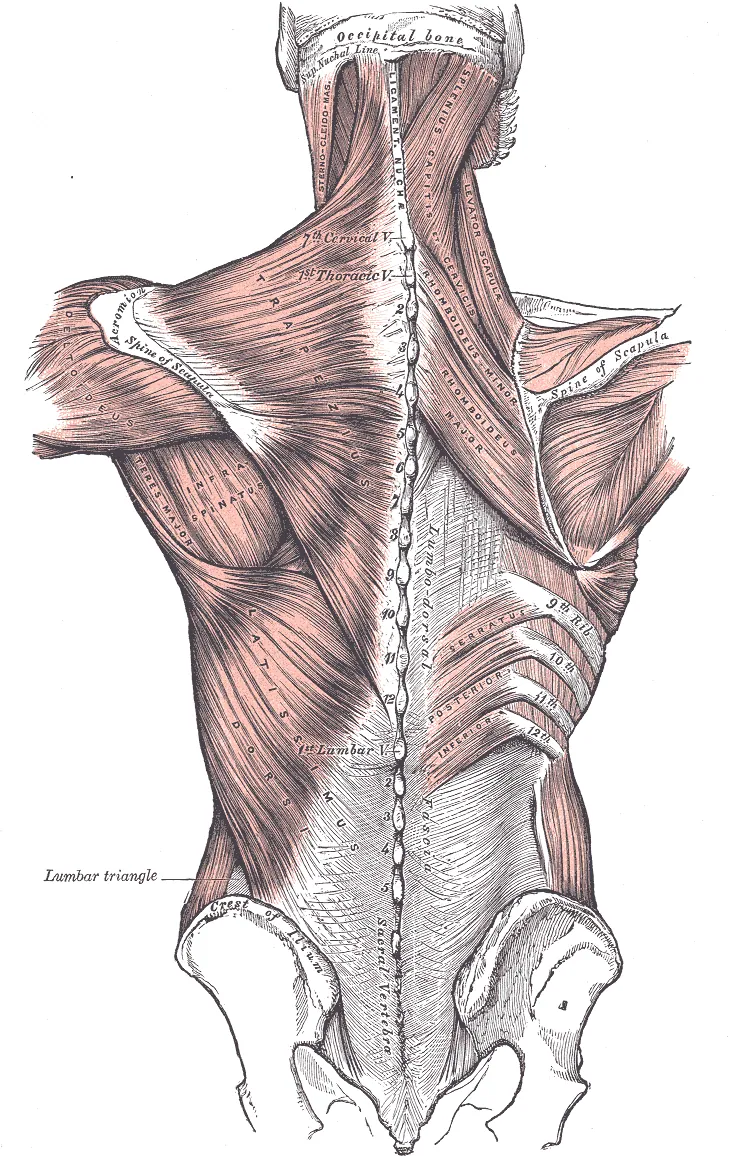
The spine sits in a groove between two thick columns of muscle (the erector spinae). Look for the dimples over the sacrum, the triangle of the trapezius and the V of the latissimus dorsi. In a seated pose these forms soften and the back rounds.
Reference table
| Form | What it does | Drawing tip |
|---|---|---|
| Ribcage | Protects the heart and lungs | Egg shape; the front ends in an arch below the chest |
| Pelvis | Supports the trunk, connects the legs | Box; mark the two hip points at the front |
| Spine | Lets the masses bend and twist | Draw it as a curved line first |
| Shoulder blade | Moves with the arm | Changes the back's silhouette as the arm moves |
| Abdomen | Flexes and twists the trunk | Squashes on one side, stretches on the other |
Historic plates
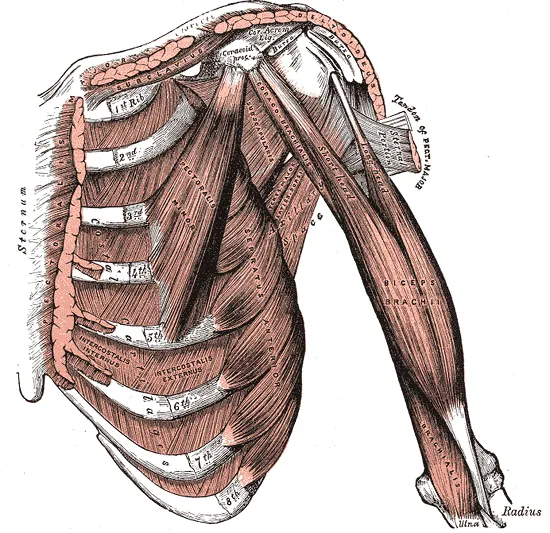
Public-domain plates from Vesalius (1543), Leonardo's anatomical notebooks and Gray's Anatomy (1918). Tap to zoom into the detail.
Master studies
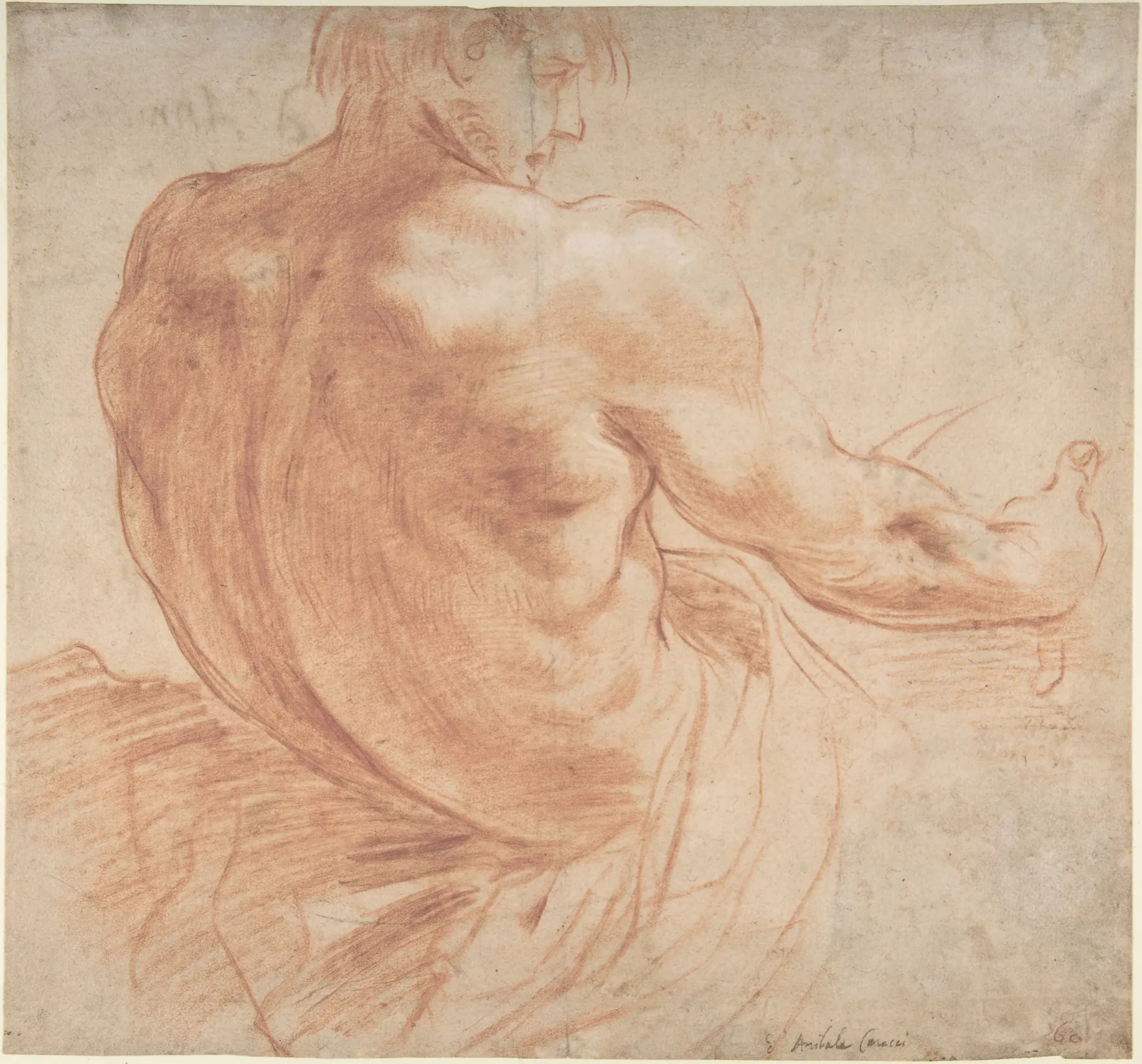
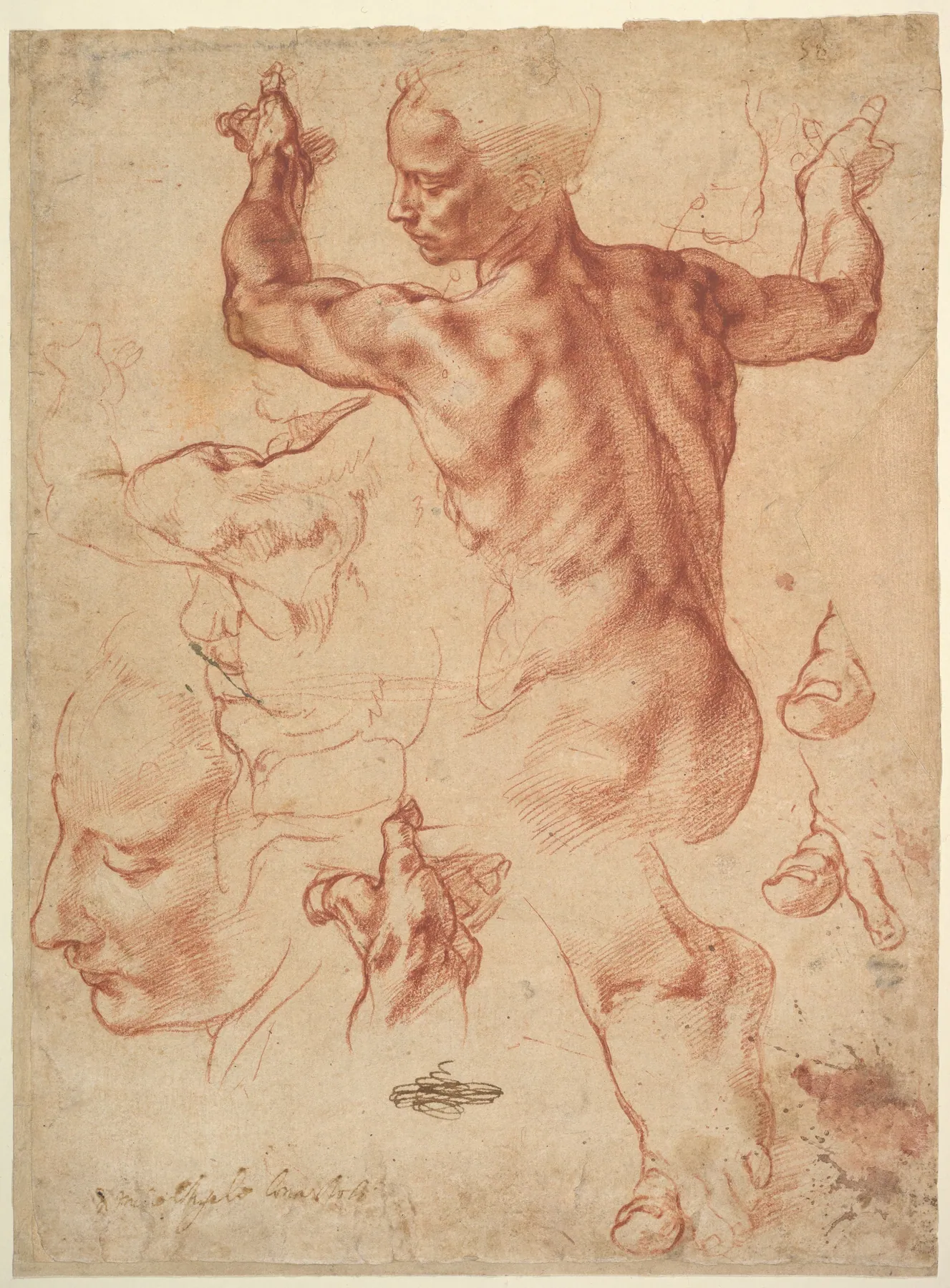
- Draw ten figures as two boxes and a spine in poses from photos, then add the outline.
- Draw a twisting torso and shade only the side that is squashed.
Watch
How to Draw Pecs - Anatomy · Proko
How to Draw the Upper Back Muscles - Anatomy and Motion · Proko
How to Draw the Neck - Anatomy for Artists · Proko
Videos load from YouTube (privacy-enhanced mode) only when you press play.