Symbolism, Art Nouveau and Expressionism
c. 1880–1920. At the turn of the 20th century, painters turned inward — to dreams, emotion, myth and decoration. Colour and line were freed to express feeling rather than describe the world.
 ◎ notes
Context
Symbolists and Pre-Raphaelites painted literature, myth and mood. Art Nouveau (Jugendstil in German) brought flowing, organic ornament to posters, buildings and painting.
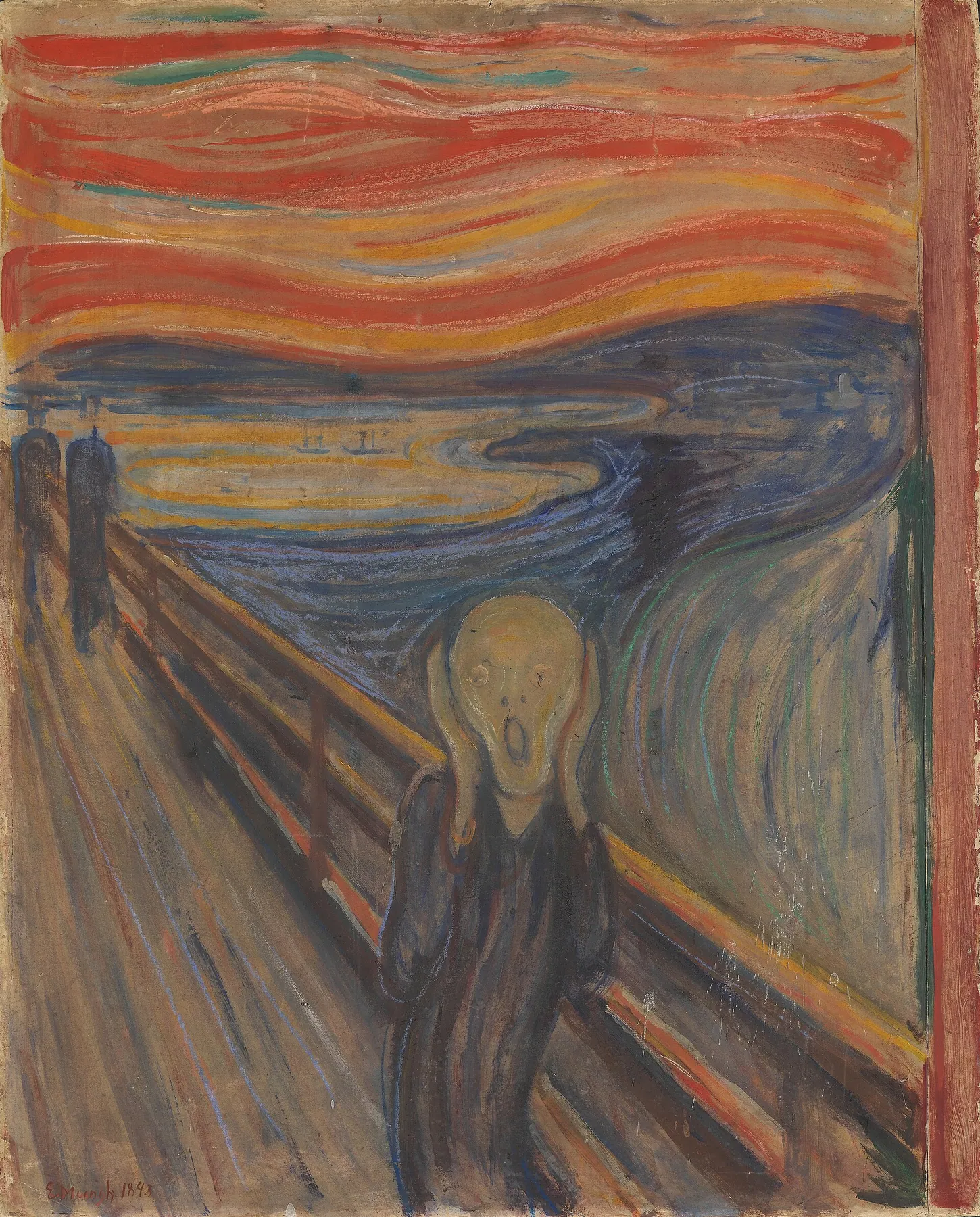
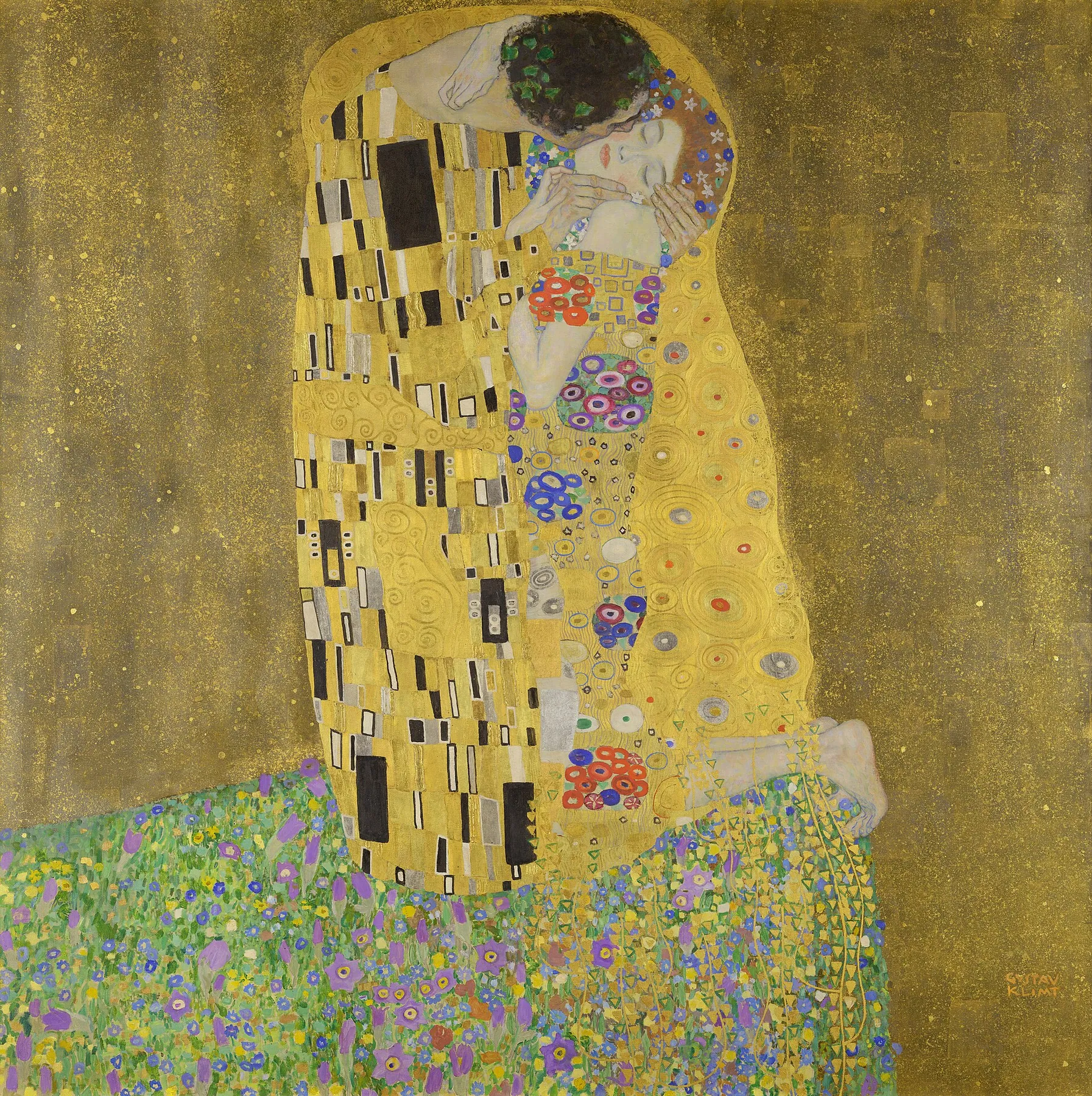
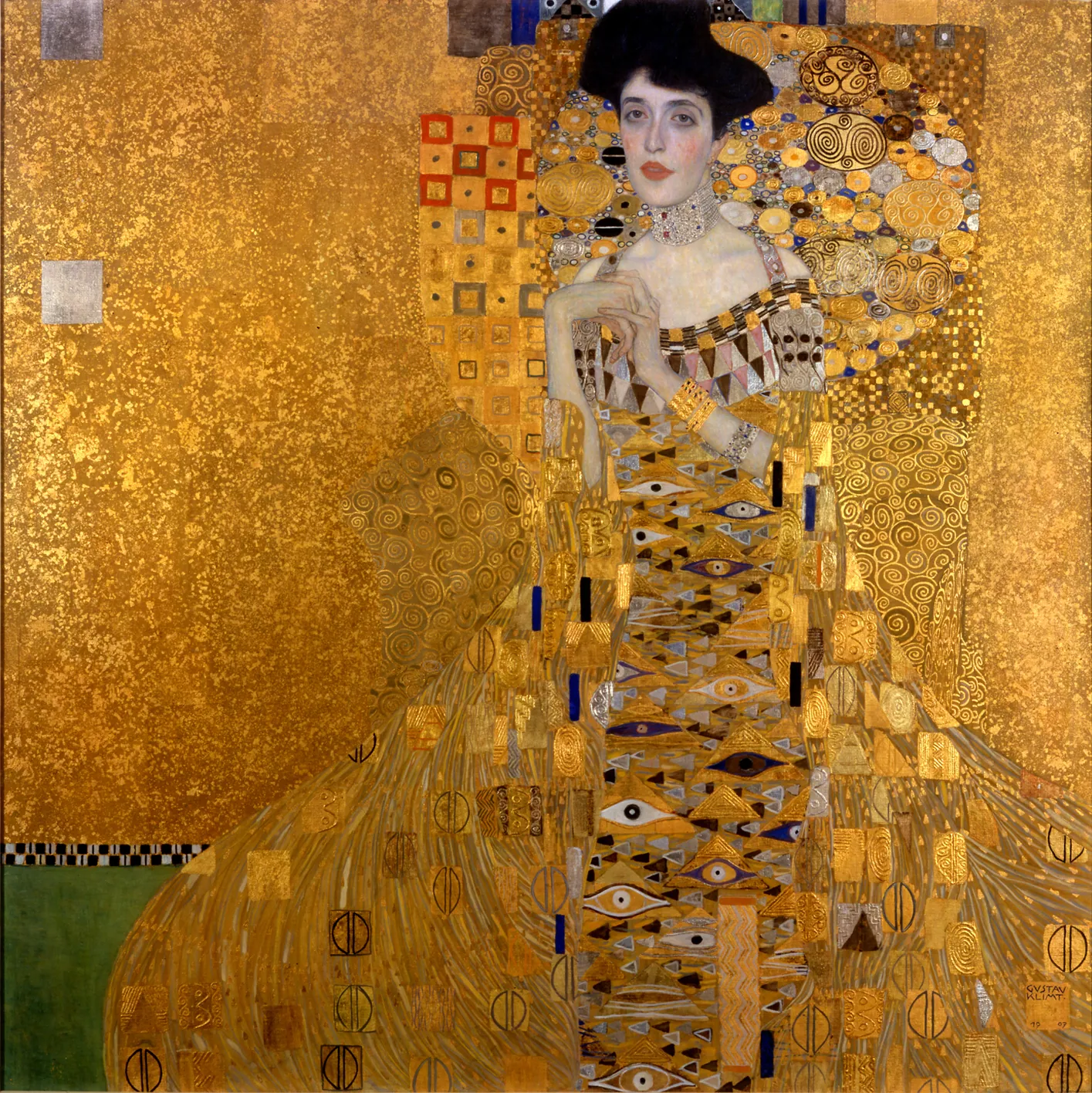
In Vienna, Gustav Klimt combined realistic faces with flat gold patterns. In Norway, Edvard Munch painted anxiety, love and death with wavy lines and acid colour.
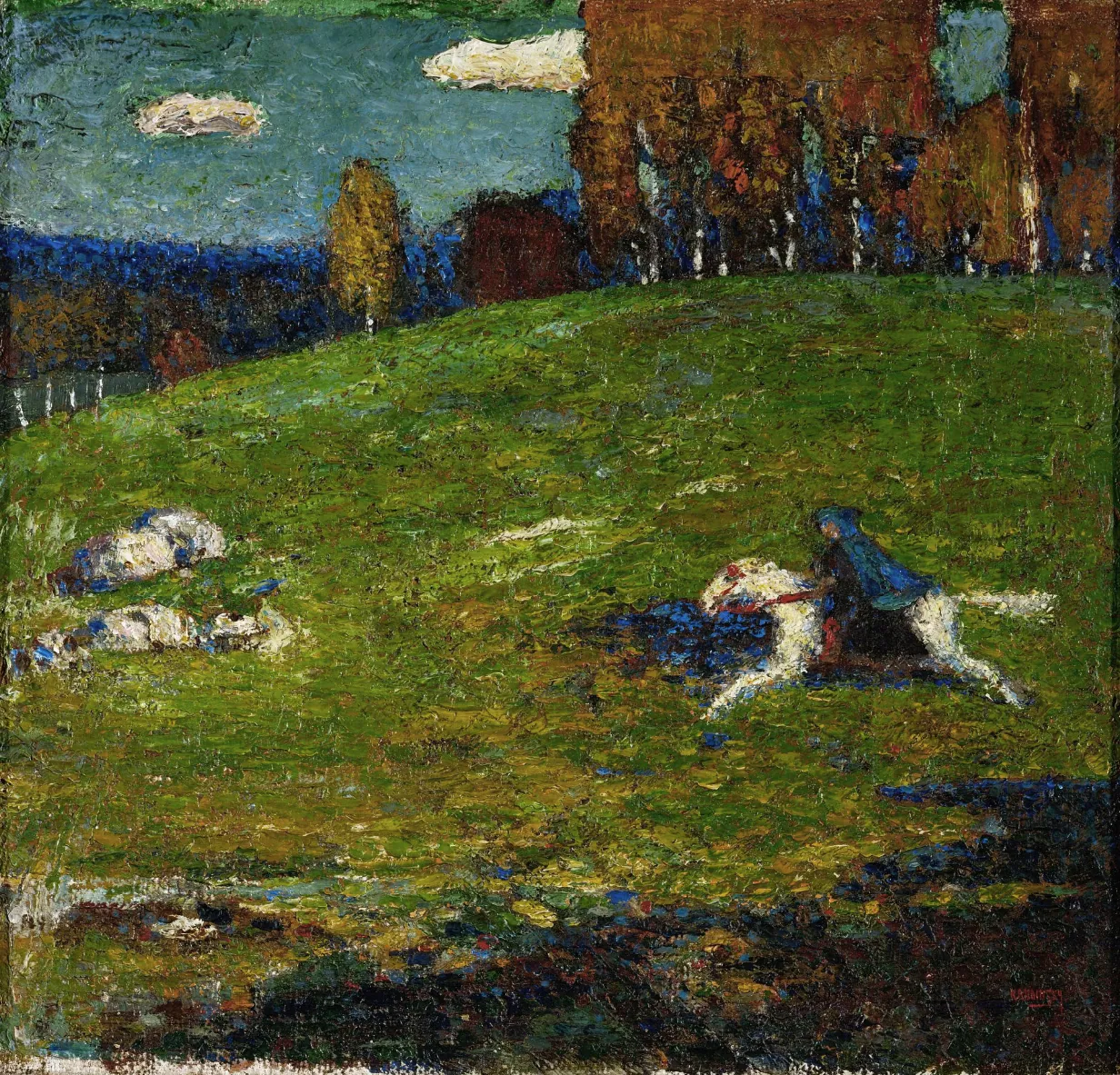
German Expressionists (Die Brücke, Der Blaue Reiter) used distorted forms and intense colour to show inner experience.
Key artists
| Artist | Life | Known for |
|---|---|---|
| Elizabeth Siddal | 1829–1862 | Pre-Raphaelite poet and artist. |
| Gustav Klimt | 1862–1918 | Gold-leaf portraits: The Kiss. |
| Edvard Munch | 1863–1944 | The Scream. |
| Wassily Kandinsky | 1866–1944 | From The Blue Rider to pure abstraction. |
| Alphonse Mucha | 1860–1939 | Art Nouveau posters. |
Key works
Tap any image to zoom; works marked ◎ have notes on key details.
Techniques
- Decorative pattern and flat ornament next to modelled faces.
- Gold and silver leaf (Klimt).
- Wavy, rhythmic lines and exaggerated colour (Munch).
- Symbolic rather than realistic colour.
- Simplified, distorted forms for emotional effect.
How to paint in this style
- Decide on one emotion or idea you want to express.
- Simplify the figure into strong shapes; let the outline flow in rhythmic curves.
- Choose colours for their emotional effect — not their 'real' colour.
- Fill backgrounds with pattern: spirals, rectangles, flowers. Try metallic paint or leaf.
- Keep faces and hands more carefully modelled so they stand out against the flat pattern.
Anything goes — strong cadmiums, synthetic ultramarine, emerald, cobalt violet, plus gold leaf or metallic paint.
Watch
Gustav Klimt, The Kiss · Smarthistory
Kandinsky, Improvisation 28 (second version), 1912 · Smarthistory
Munch, The Storm · Smarthistory
Videos load from YouTube (privacy-enhanced mode) only when you press play.