Home / The Book / Part III · Craft, genres and media
Part III · Craft, genres and media · Chapter 30 of 31
The landscape
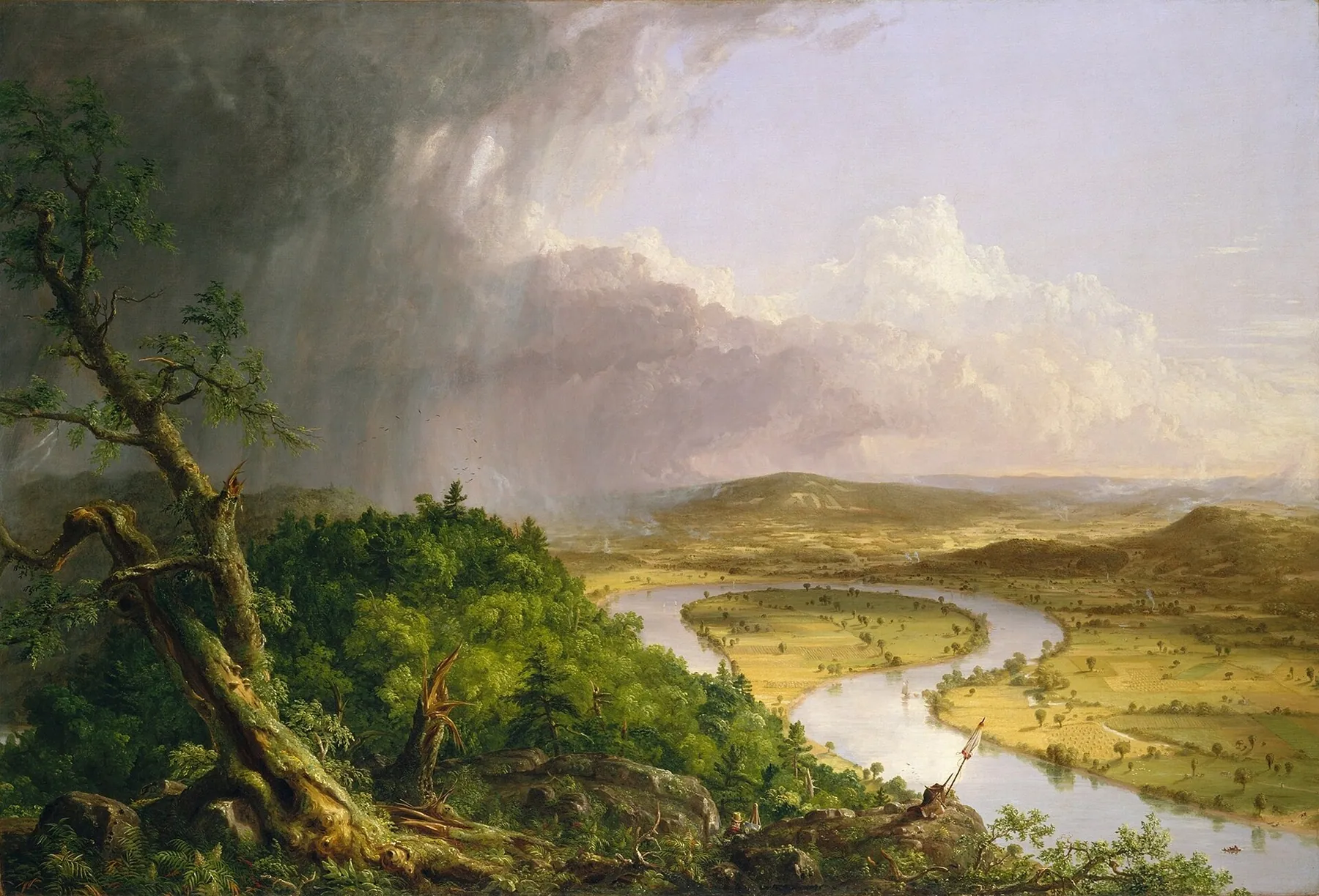
Landscape became a subject in its own right with the Dutch in the 17th century and the plein-air painters of the 19th. It is the best place to learn light, colour and atmosphere.
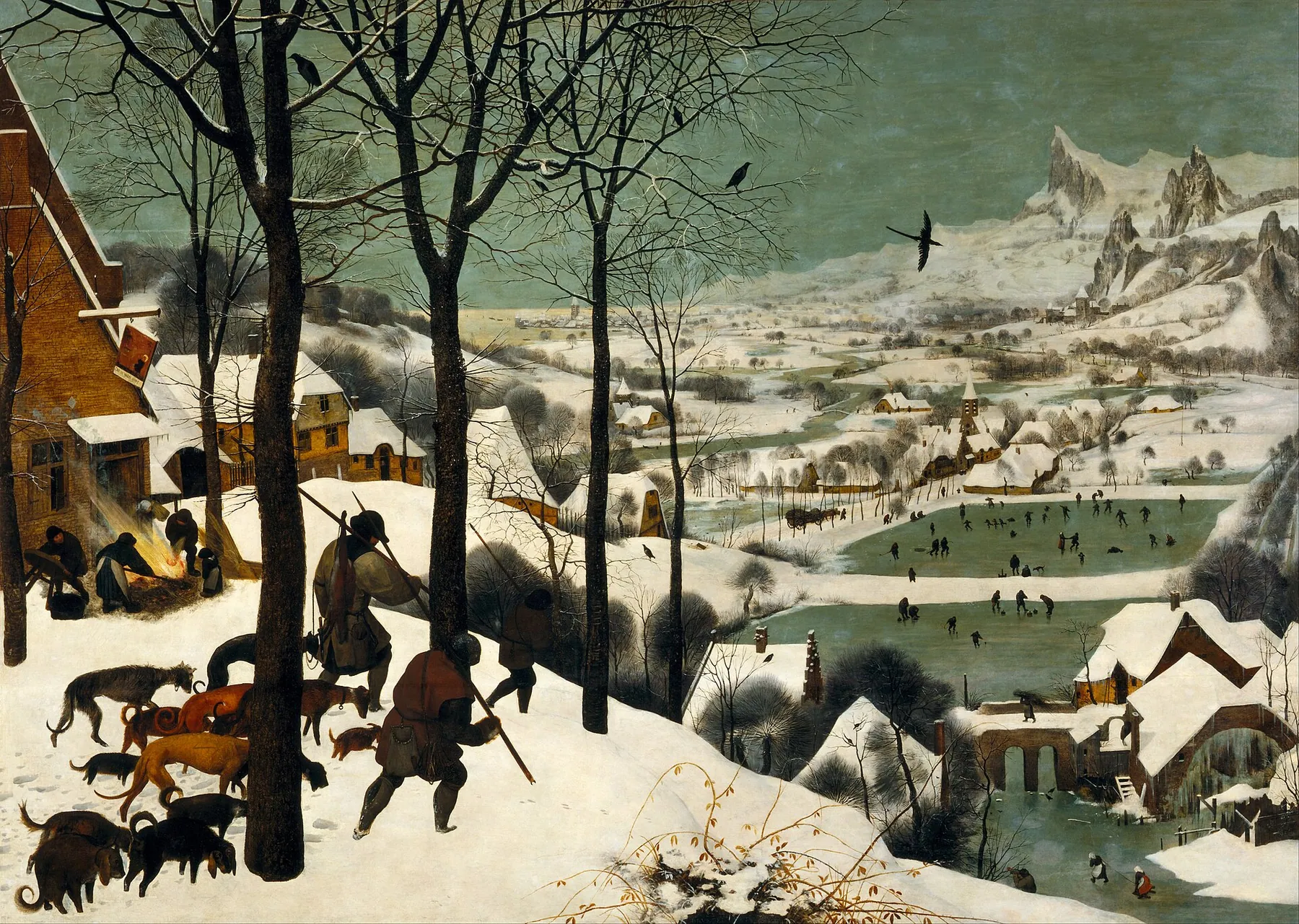
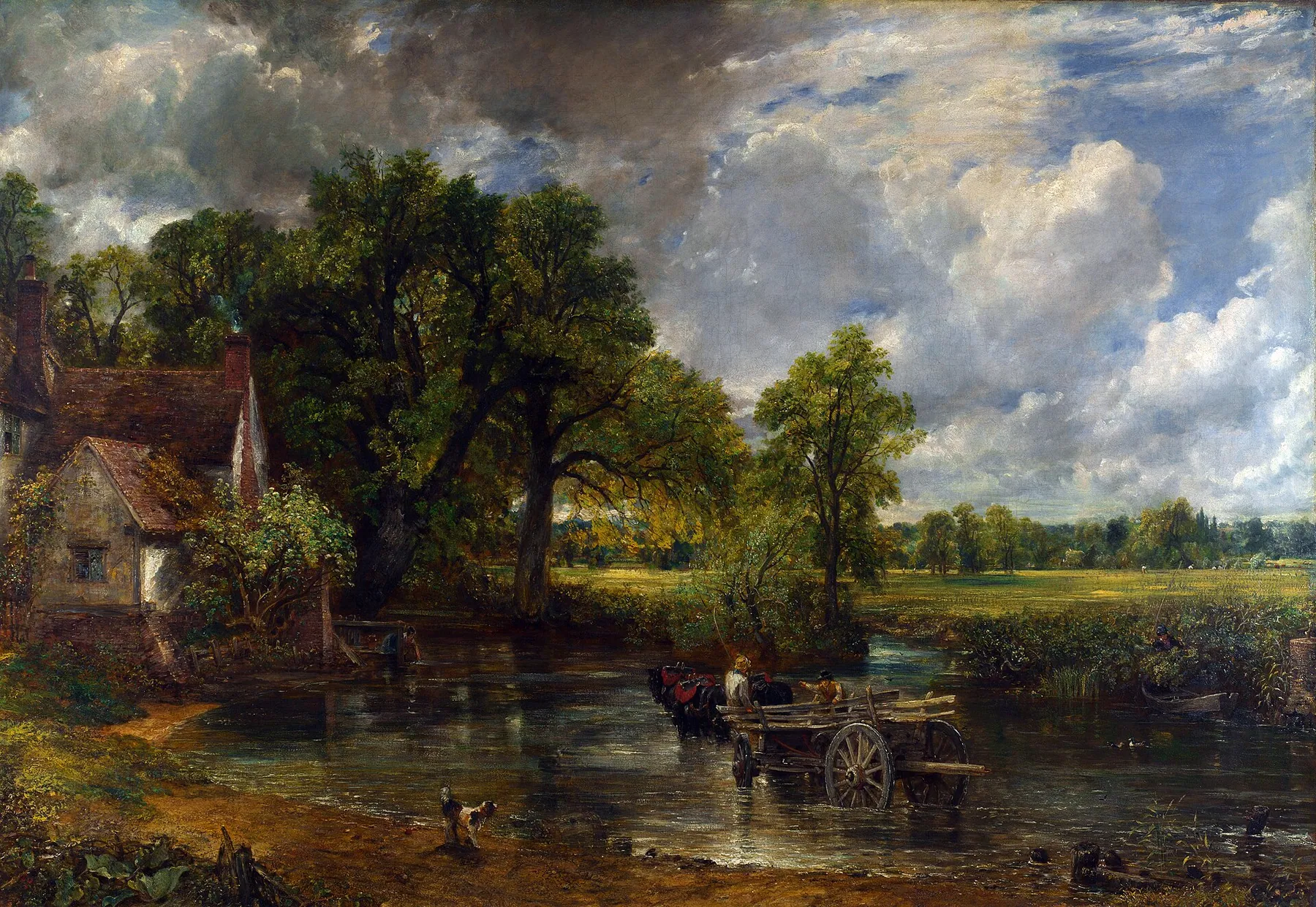
◎ notesHunters in the Snow, Pieter Bruegel the Elder (1565). Oil on oak panel. Kunsthistorisches Museum, Vienna. Source: Wikimedia Commons · Public domain◎ notesThe Hay Wain, John Constable (1821). Oil on canvas. The National Gallery, London. Source: Wikimedia Commons · Public domainThe Oxbow, Thomas Cole (1836). Oil on canvas. The Metropolitan Museum of Art, New York. Source: Wikimedia Commons · Public domain
Seeing the planes
A landscape has four main planes with predictable values in daylight: the sky (lightest), the ground plane (next), slanted planes like hills and roofs, and upright planes like trees (darkest). Painting these relationships correctly makes even a simple sketch convincing.
Use atmospheric perspective: lighter, cooler and softer as things recede. Keep the foreground for the strongest contrast and texture.
Plein air
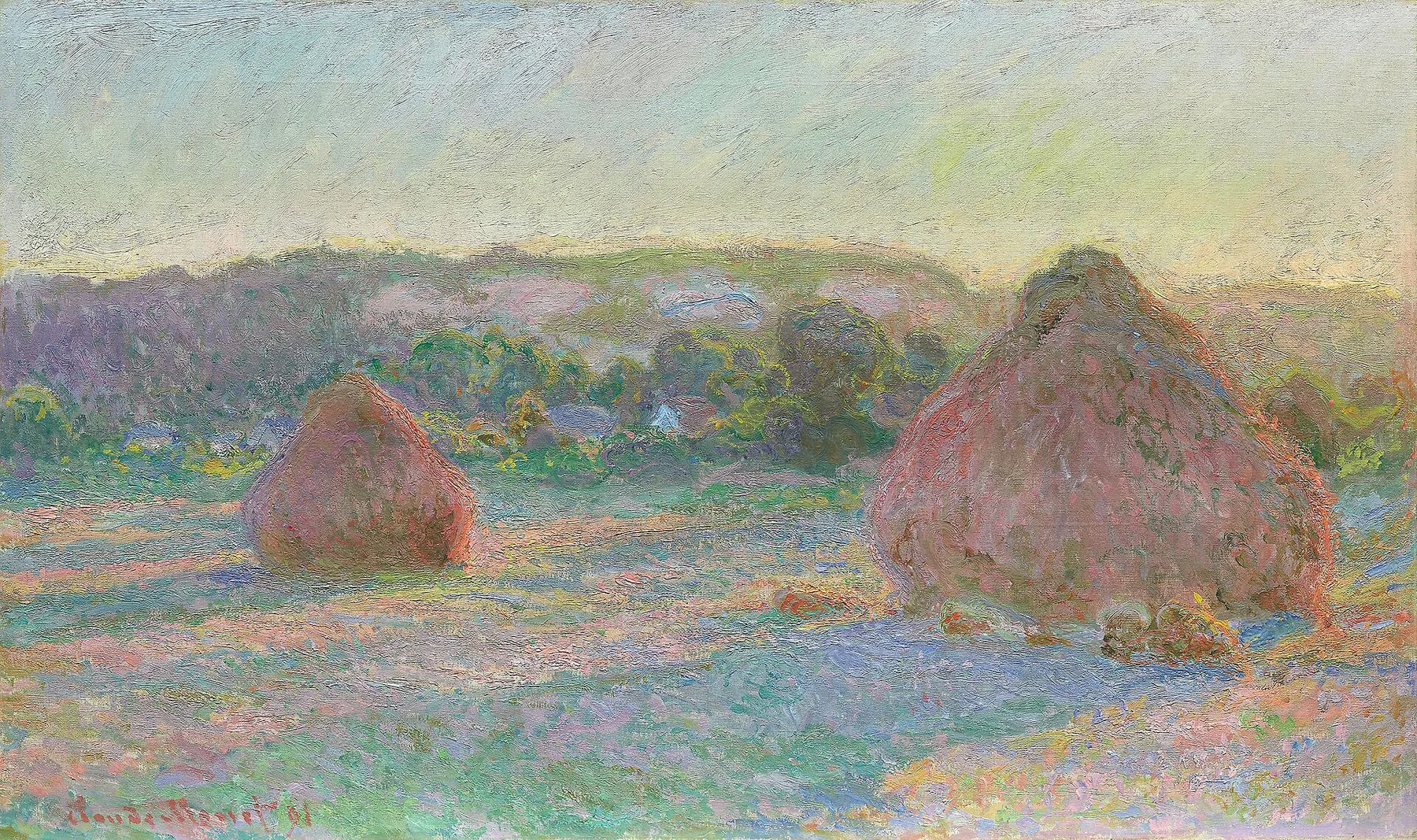
Painting outdoors forces you to simplify because the light changes. Work small, limit yourself to one or two hours and squint to see the big shapes. Monet's haystacks show the same subject under different light at different times.
Try it
Make a value thumbnail of the four planes.
Paint the sky first, then the far distance, then the middle ground.
Add the foreground with thicker paint and sharper edges.
Finish with a few accents of strongest colour.
Examples to study
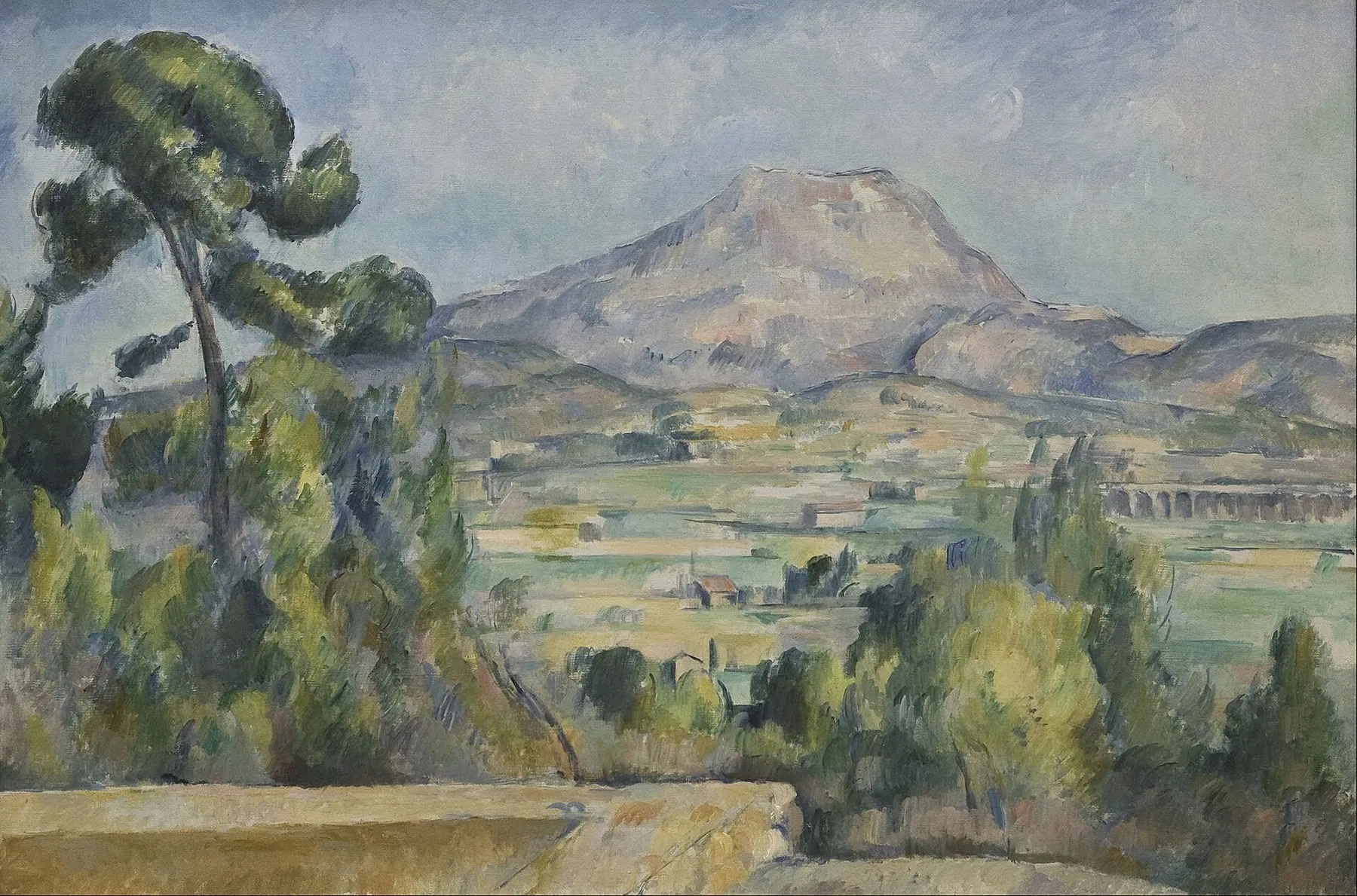
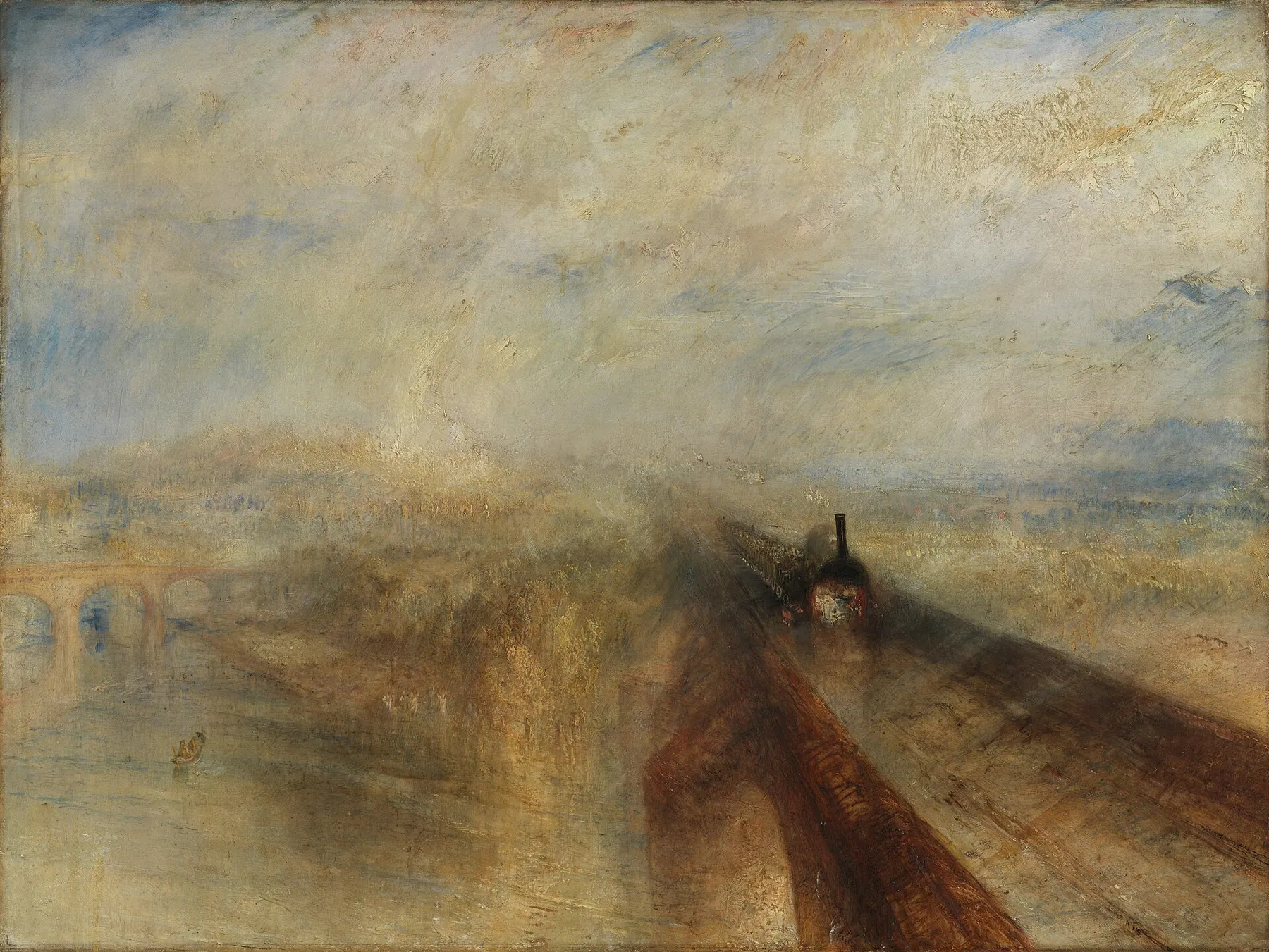
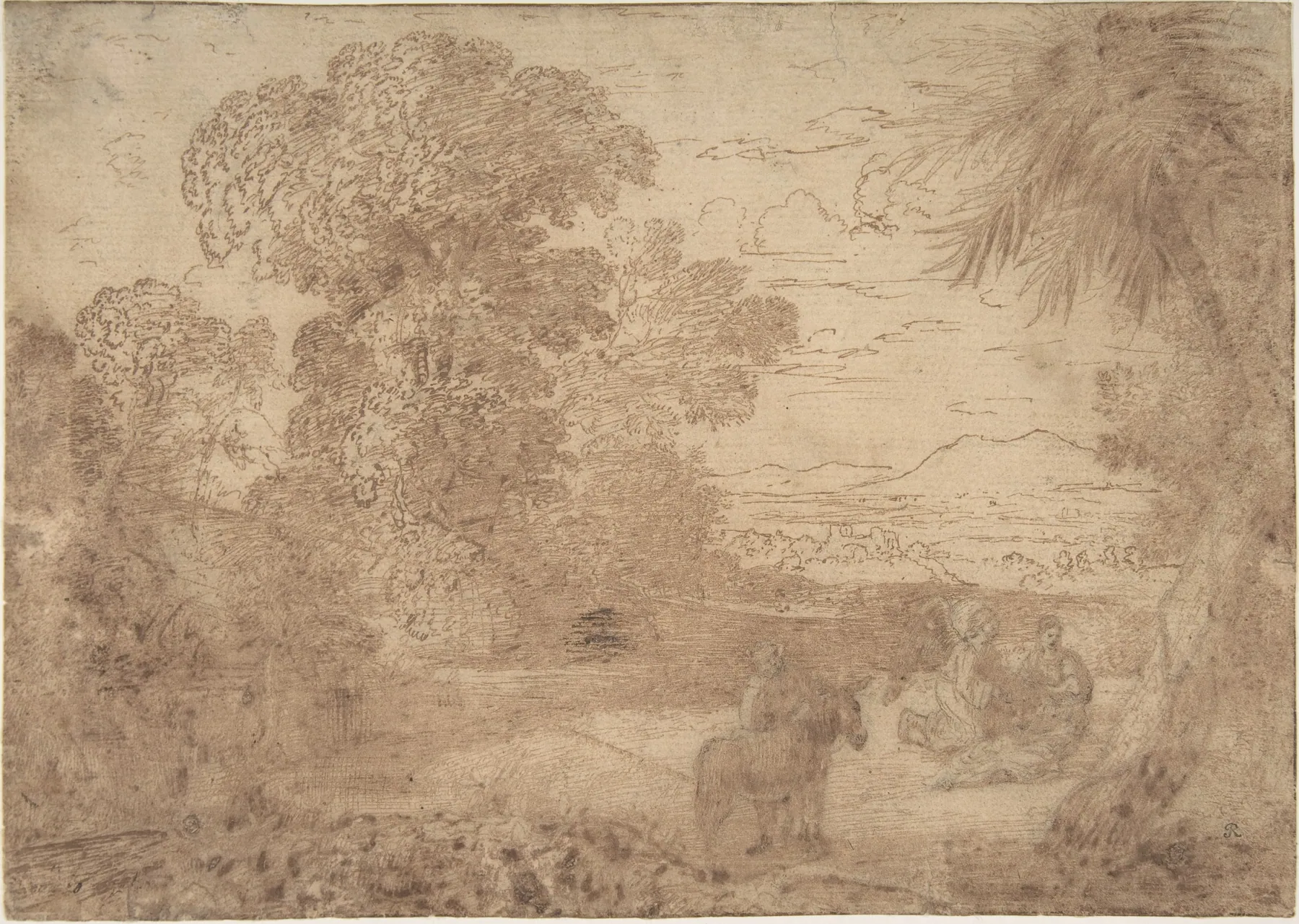
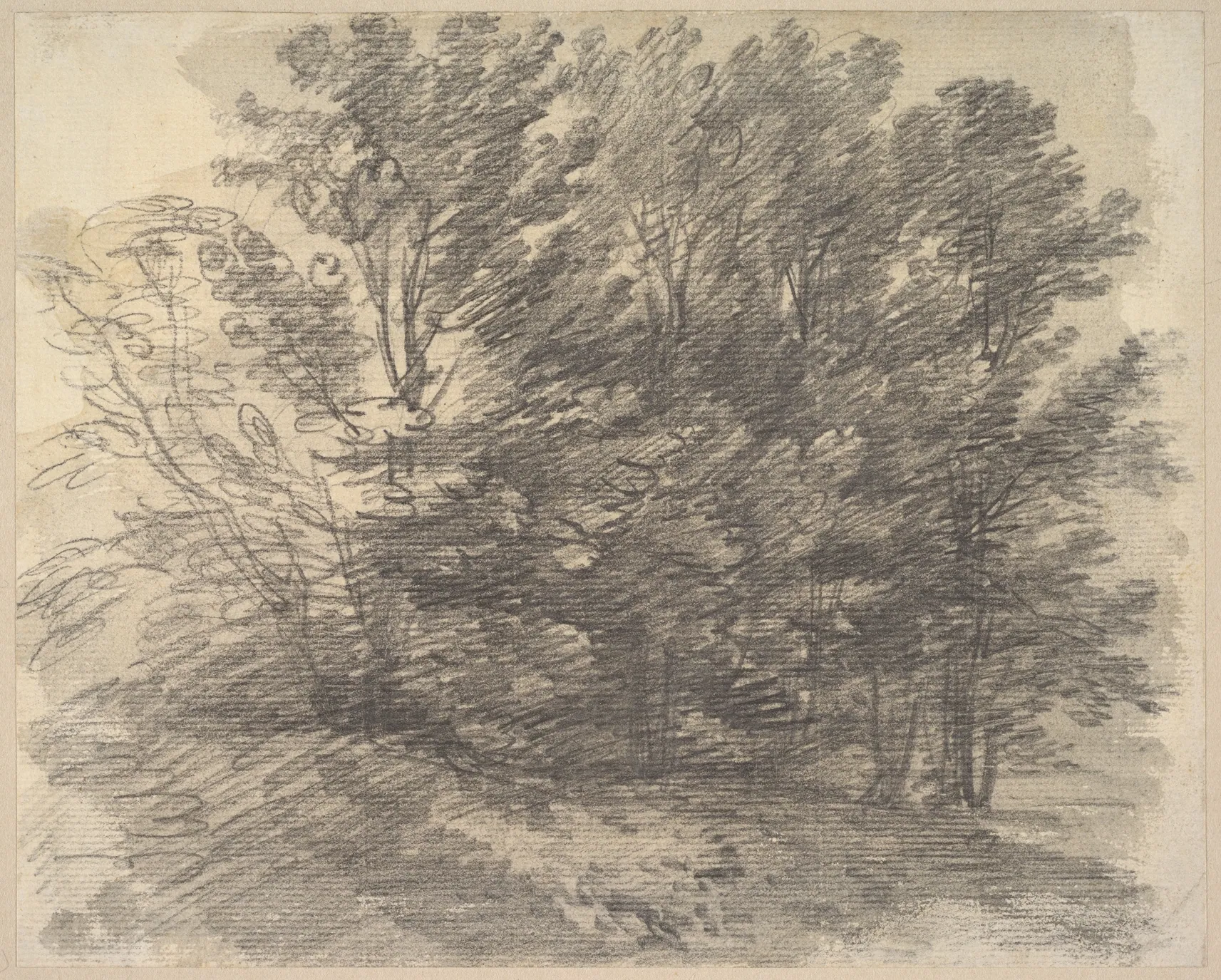
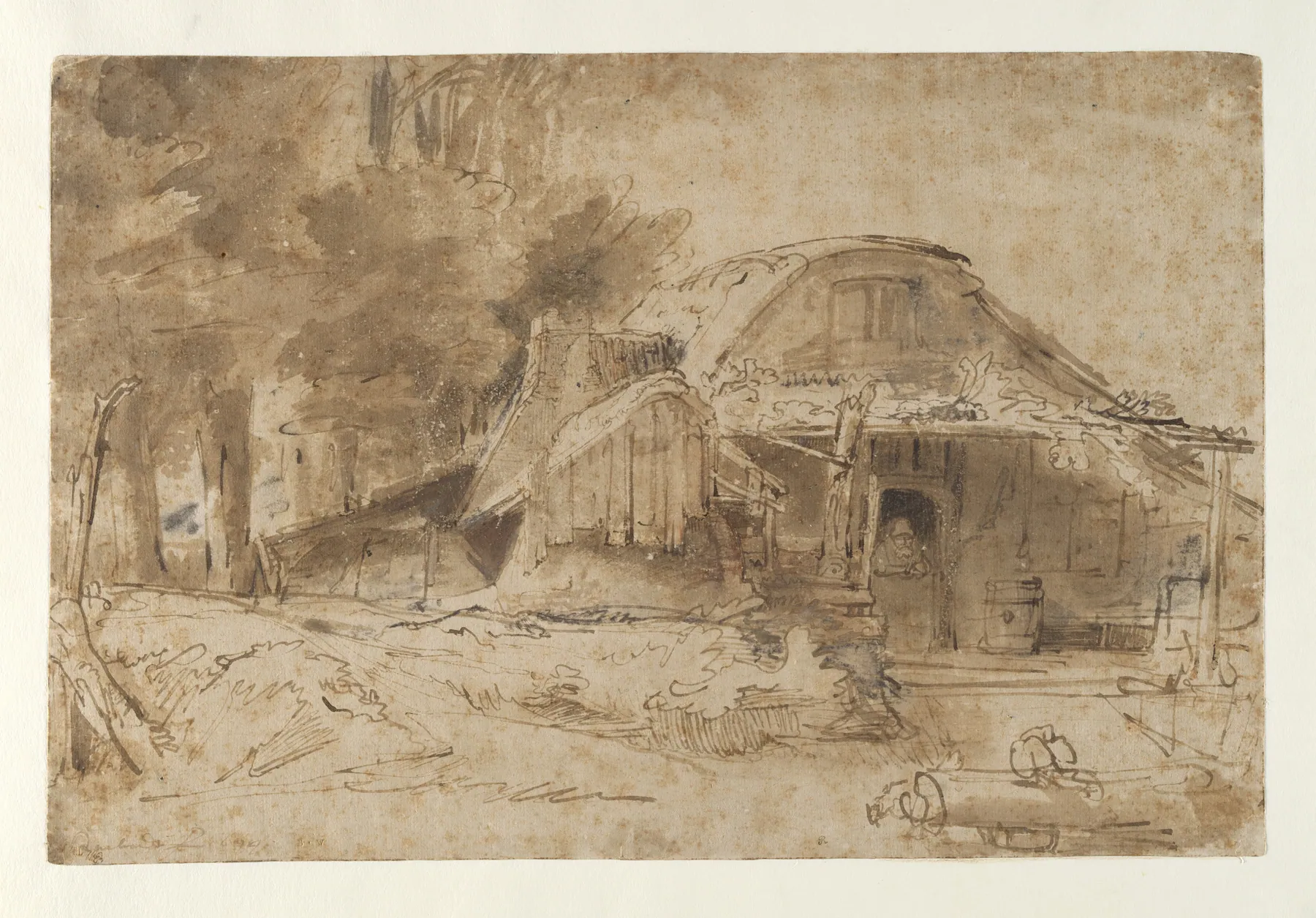
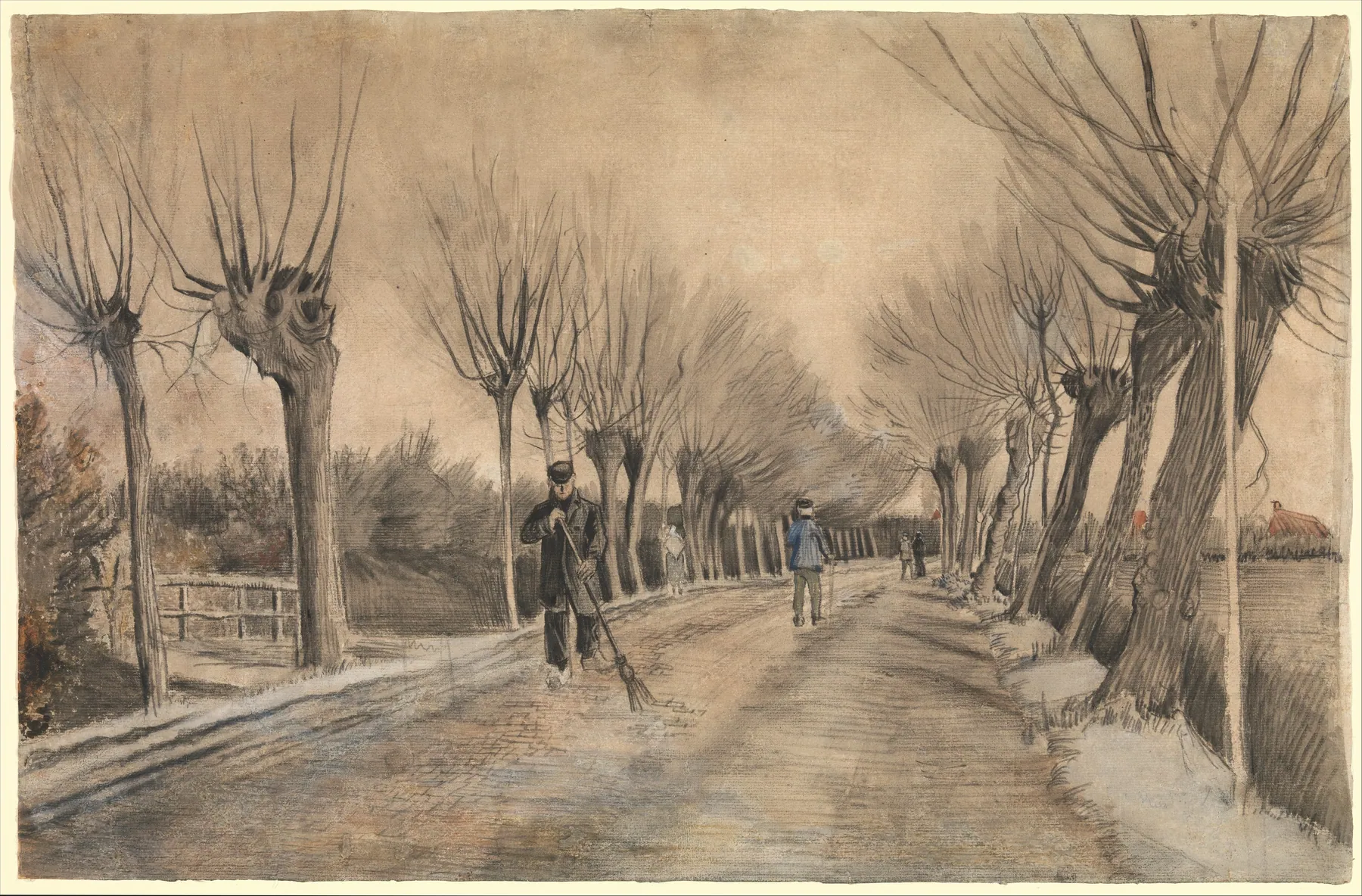
Mont Sainte-Victoire, Paul Cézanne (c. 1887). Oil on canvas. The Courtauld, London. Source: Wikimedia Commons · Public domainStacks of Wheat (End of Summer), Claude Monet (1890–1891). Oil on canvas. Art Institute of Chicago. Source: Wikimedia Commons · Public domainRain, Steam and Speed, J. M. W. Turner (1844). Oil on canvas. The National Gallery, London. Source: Wikimedia Commons · Public domainLandscape with the Rest on the Flight into Egypt, Claude Lorrain (ca. 1635). Pen and brown ink, over black chalk. The Metropolitan Museum of Art, New York. Source: The Metropolitan Museum of Art · CC0 (Met Open Access)A clump of trees, Thomas Gainsborough (ca. 1757). Graphite, brush and gray wash. The Metropolitan Museum of Art, New York. Source: The Metropolitan Museum of Art · CC0 (Met Open Access)Cottage near the Entrance to a Wood, Rembrandt (1644). Pen and inks ranging from light to dark brown, brown washes, corrected in white (oxidized, partially abraded), and touches of red chalk (in added structures to the left of the main cottage). The Metropolitan Museum of Art, New York. Source: The Metropolitan Museum of Art · CC0 (Met Open Access)Road in Etten, Vincent van Gogh (1881). Chalk, pencil, pastel, watercolor. Underdrawing in pen and brown ink. The Metropolitan Museum of Art, New York. Source: The Metropolitan Museum of Art · CC0 (Met Open Access)
Watch
I Paint a Quick Landscape - Oil Painting Instruction · Draw Mix Paint
Sketchbook Painting Outdoors - My Process · Marco Bucci
Travel Sketching - Capturing the Feel of a Place · Marco Bucci
Videos load from YouTube (privacy-enhanced mode) only when you press play.
 ◎ notes
 ◎ notes