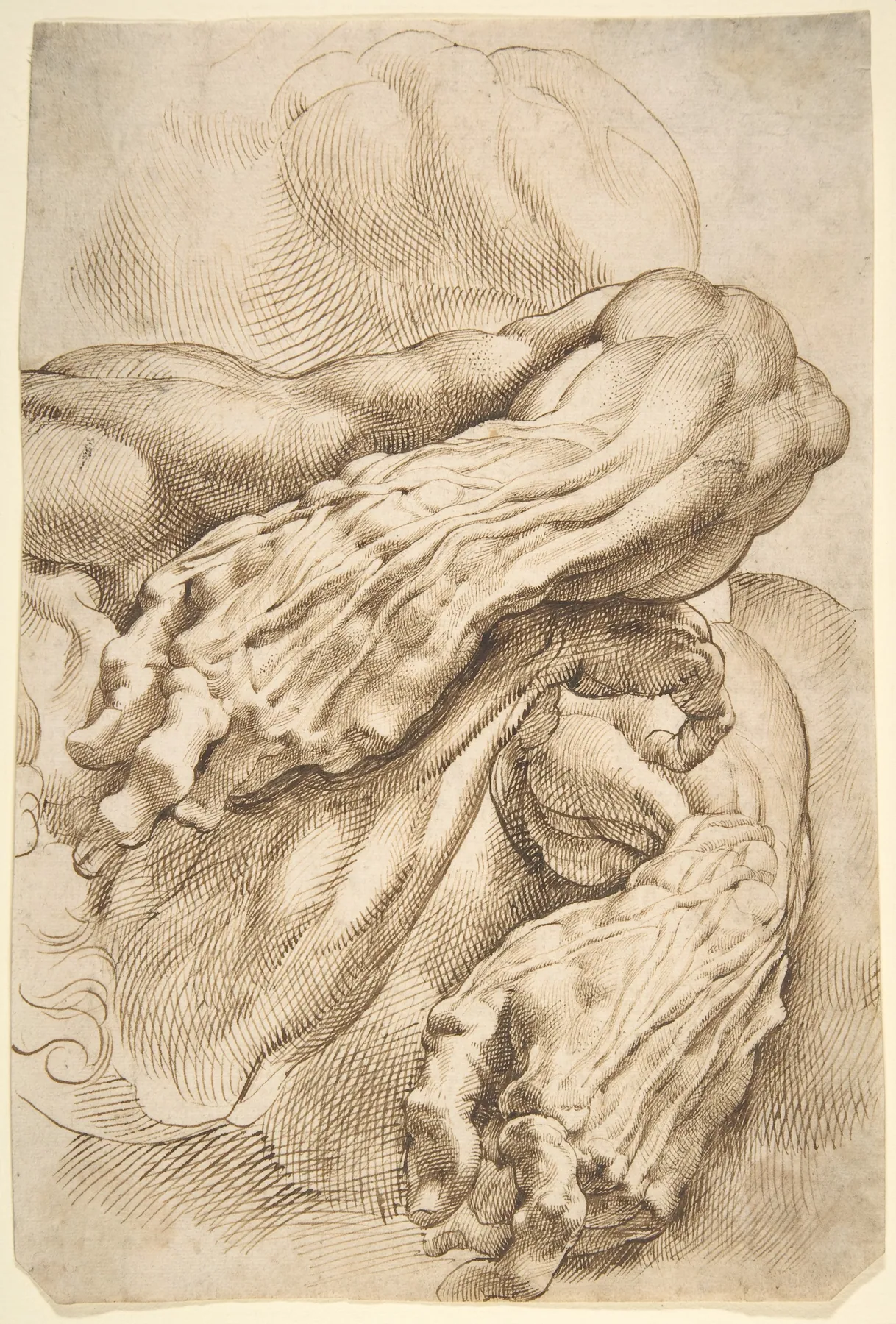
Hands are as expressive as faces and just as feared. Treat the hand as a box-shaped palm with a wedge-shaped thumb and four tapering fingers — and remember that the forearm twists to turn it.
The arm
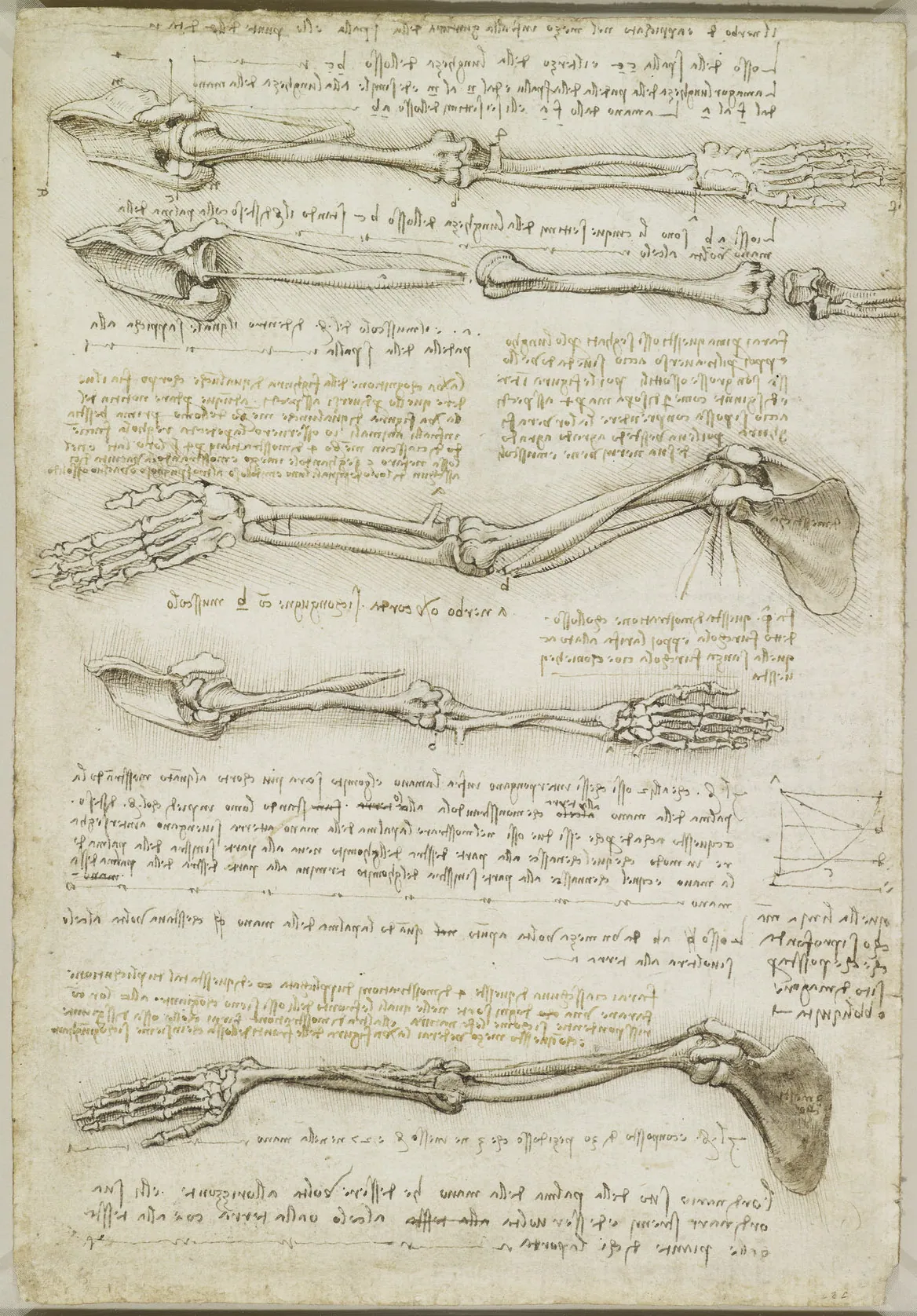
The upper arm is roughly cylindrical, flattened front to back. The forearm is wider at the elbow, narrowing and flattening towards the wrist. When the palm faces down, the radius crosses over the ulna and the forearm's muscles spiral; when the palm faces up they run parallel.
The hand
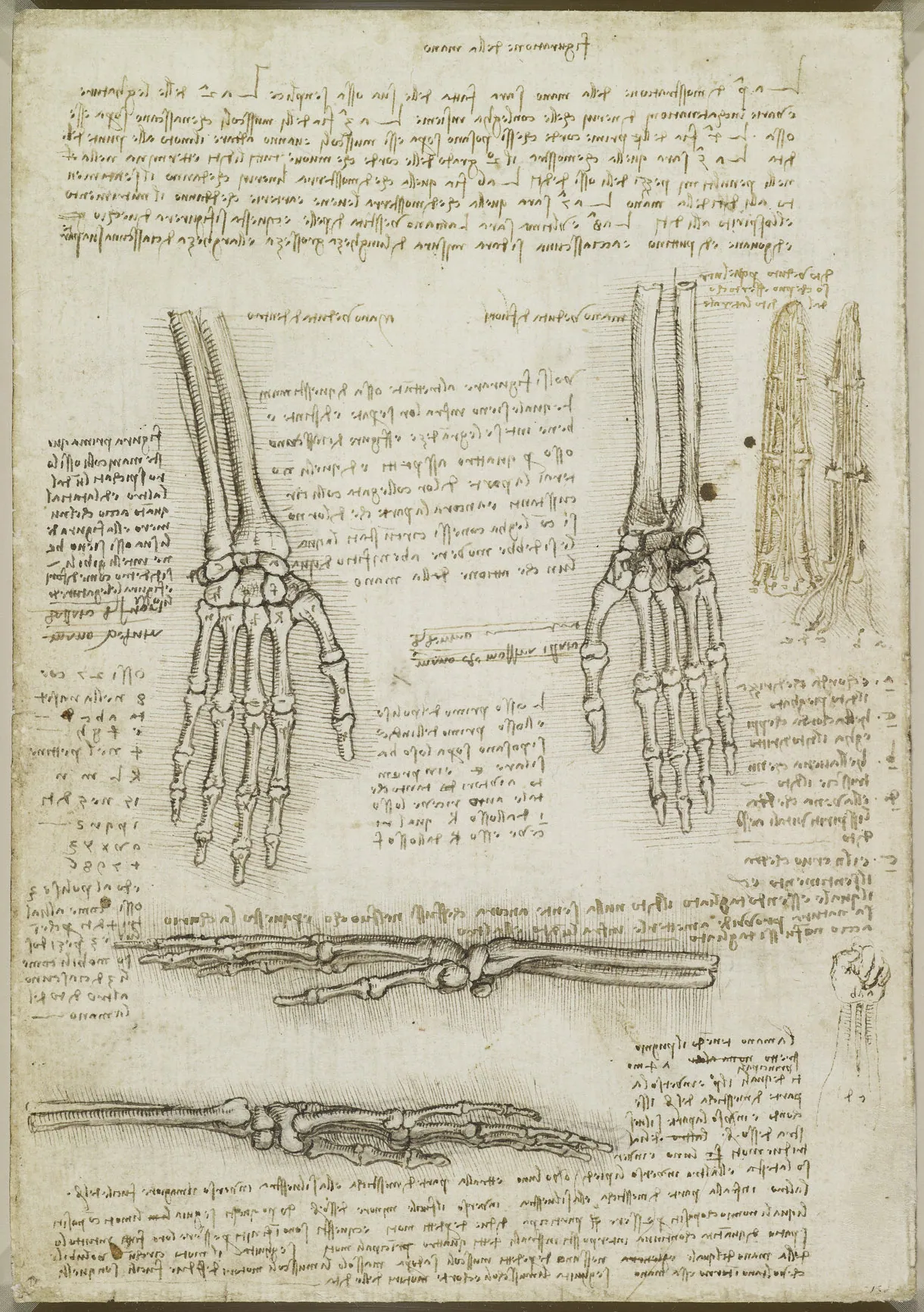
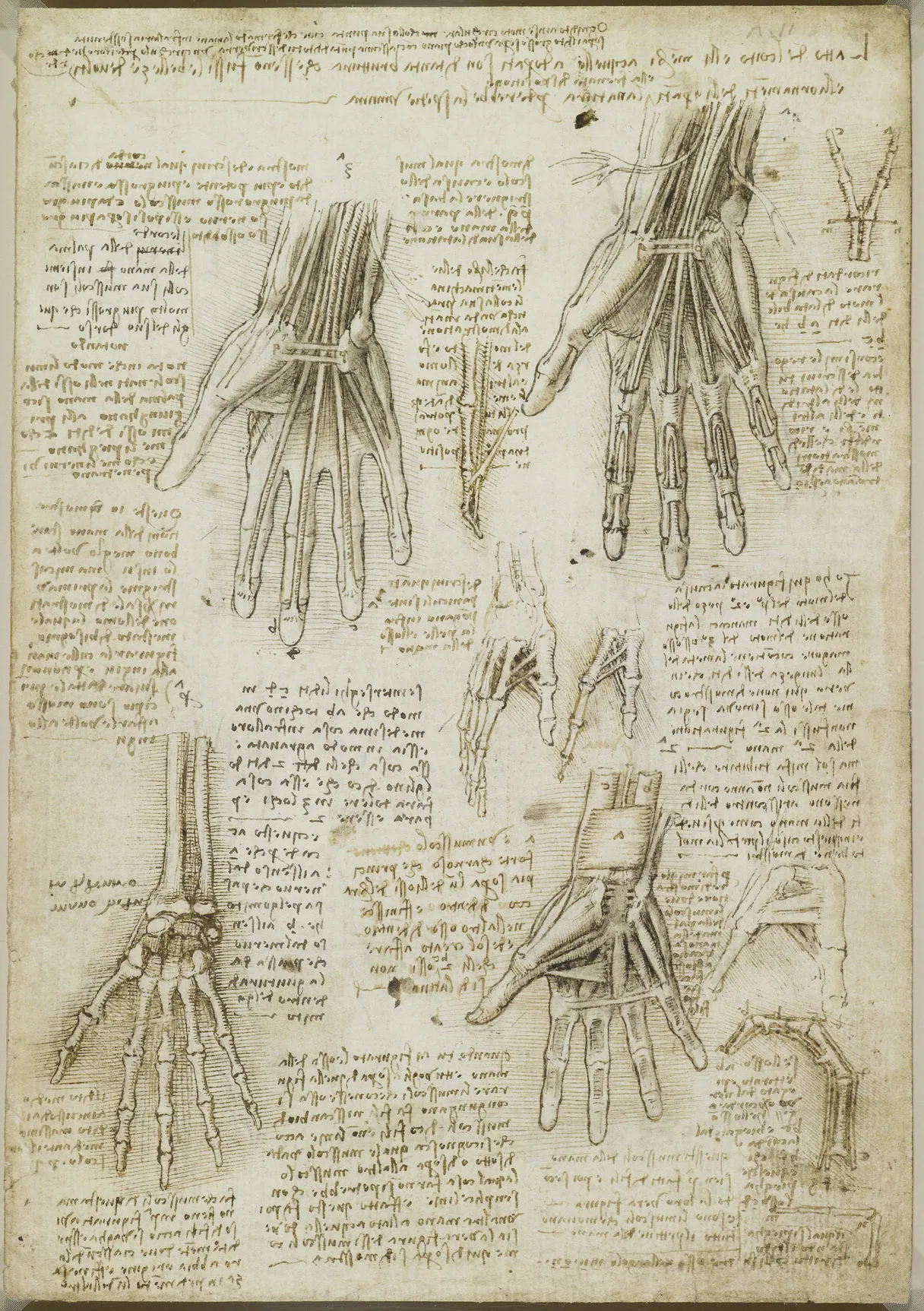
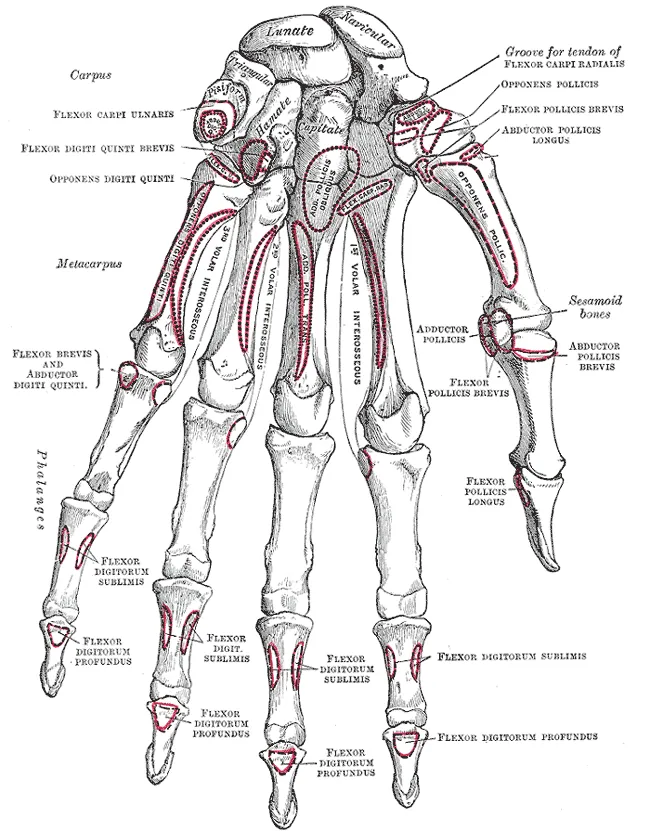
The palm is about as long as the middle finger. The knuckles do not form a straight line but an arc — the index and middle knuckles are highest, the little finger's lowest. Fingers have three bones each; the thumb has two plus a long metacarpal that sits much lower than the others, near the wrist.
Each finger tapers and bends in a curve, and when the fingers close they all point towards the base of the thumb. Draw the gesture of the hand first — the big curve from wrist to fingertips — then block it with boxes.
Reference table
Part
Bones
Note
Upper arm
Humerus
Deltoid at the top, biceps in front, triceps behind
Forearm
Radius, ulna
Radius turns around the ulna
Wrist
8 carpals
Moves the hand as a block
Palm
5 metacarpals
Slightly arched, not flat
Fingers
3 phalanges each
Joints line up on curves
Thumb
2 phalanges + metacarpal
Swings across the palm; very mobile
Historic plates
Public-domain plates from Vesalius (1543), Leonardo's anatomical notebooks and Gray's Anatomy (1918). Tap to zoom into the detail.
The bones and muscles of the arm, Leonardo da Vinci (c. 1510–1511). Plate / drawing. Source: Wikimedia Commons · Public domainThe bones of the hand, Leonardo da Vinci (c. 1510–1511). Plate / drawing. Source: Wikimedia Commons · Public domainThe bones, muscles and tendons of the hand, Leonardo da Vinci (c. 1510–1511). Plate / drawing. Source: Wikimedia Commons · Public domainBones of the left hand, palm view (Gray's Anatomy, fig. 219), Henry Vandyke Carter for Henry Gray (1918 edition). Plate / drawing. Source: Wikimedia Commons · Public domain
Master studies
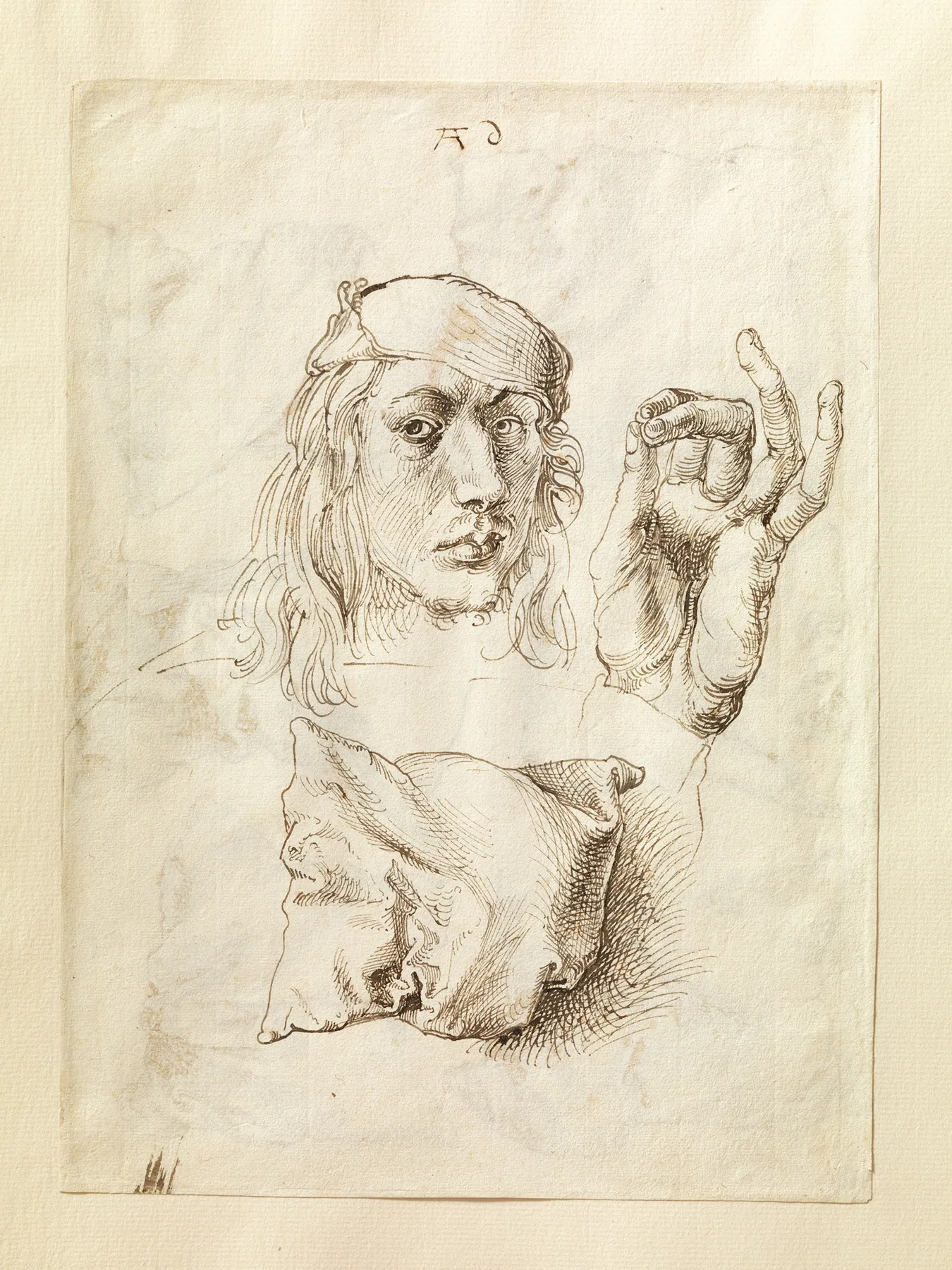
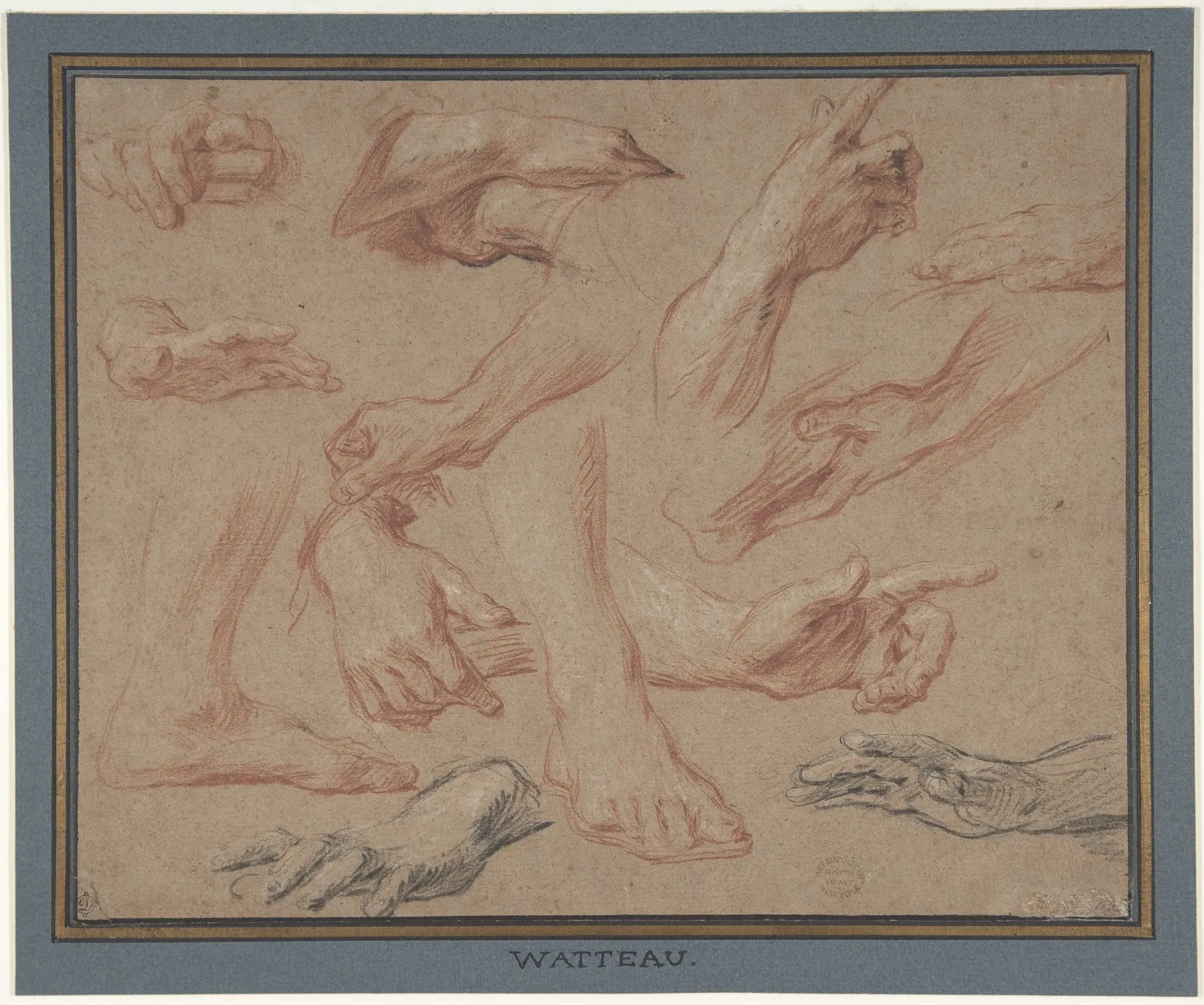
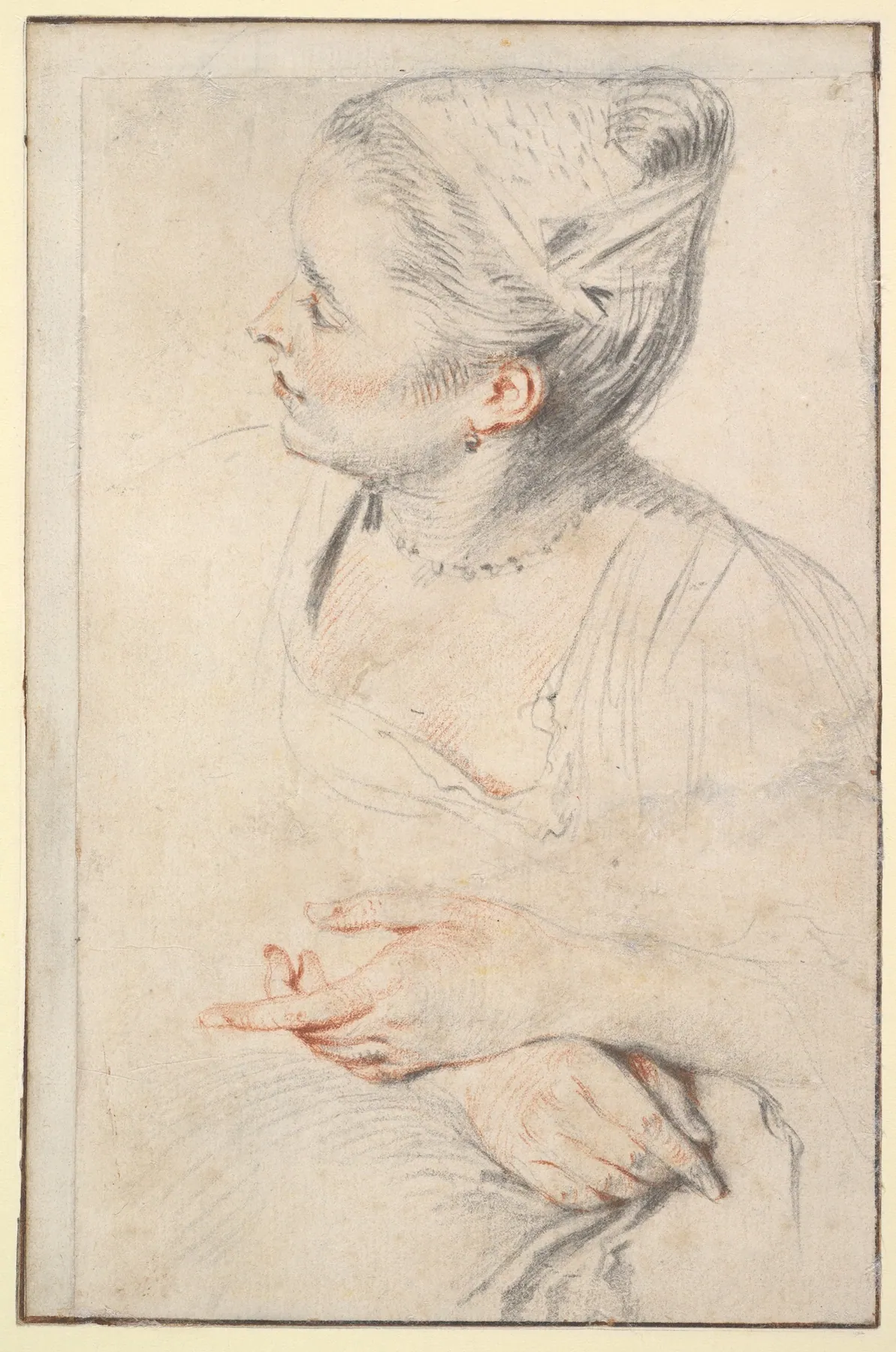
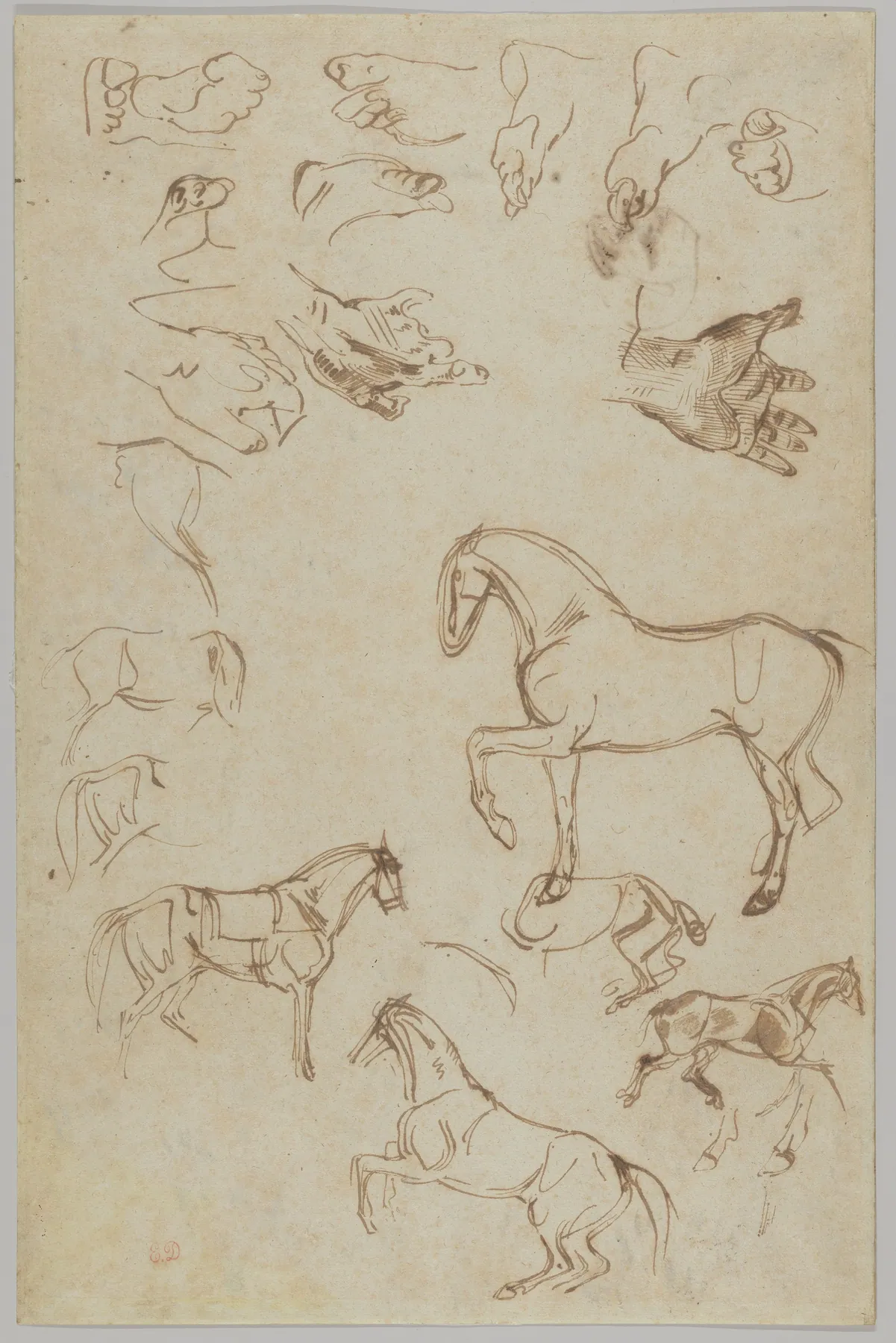
Self-portrait, Study of a Hand and a Pillow, Albrecht Dürer (1493). Pen and brown ink. The Metropolitan Museum of Art, New York. Source: The Metropolitan Museum of Art · CC0 (Met Open Access)Studies of Hands and Feet, François Le Moyne (early 18th century). Red and black chalk, heightened with white, on beige paper. Framing lines in pen and brown ink. Lined. The Metropolitan Museum of Art, New York. Source: The Metropolitan Museum of Art · CC0 (Met Open Access)Study of a Woman's Head and Hands, Antoine Watteau (ca. 1717). Red and white chalk and graphite. The Metropolitan Museum of Art, New York. Source: The Metropolitan Museum of Art · CC0 (Met Open Access)Studies of Horses, Hands, and Feet, Eugène Delacroix (ca. 1822–27). Pen and brown and iron gall ink (recto); graphite, pen and iron gall ink, brush and brown wash (verso). The Metropolitan Museum of Art, New York. Source: The Metropolitan Museum of Art · CC0 (Met Open Access)Anatomical Studies: a left forearm in two positions and a right forearm, Peter Paul Rubens (ca. 1600–05). Pen and brown ink. The Metropolitan Museum of Art, New York. Source: The Metropolitan Museum of Art · CC0 (Met Open Access)
Practice
Fill a page with your non-drawing hand in ten poses, 3 minutes each.
Draw the hand as a mitten (palm and thumb only), then split it into fingers.
Watch
How to Draw Hand Bones - Drawing Anatomy for Artists · Proko
How to Draw HANDS - Muscle Anatomy of the Hand · Proko
How to Draw Hands from IMAGINATION - Step-by-Step · Proko
Videos load from YouTube (privacy-enhanced mode) only when you press play.